
Article Sidebar
Main Article Content
Abstract
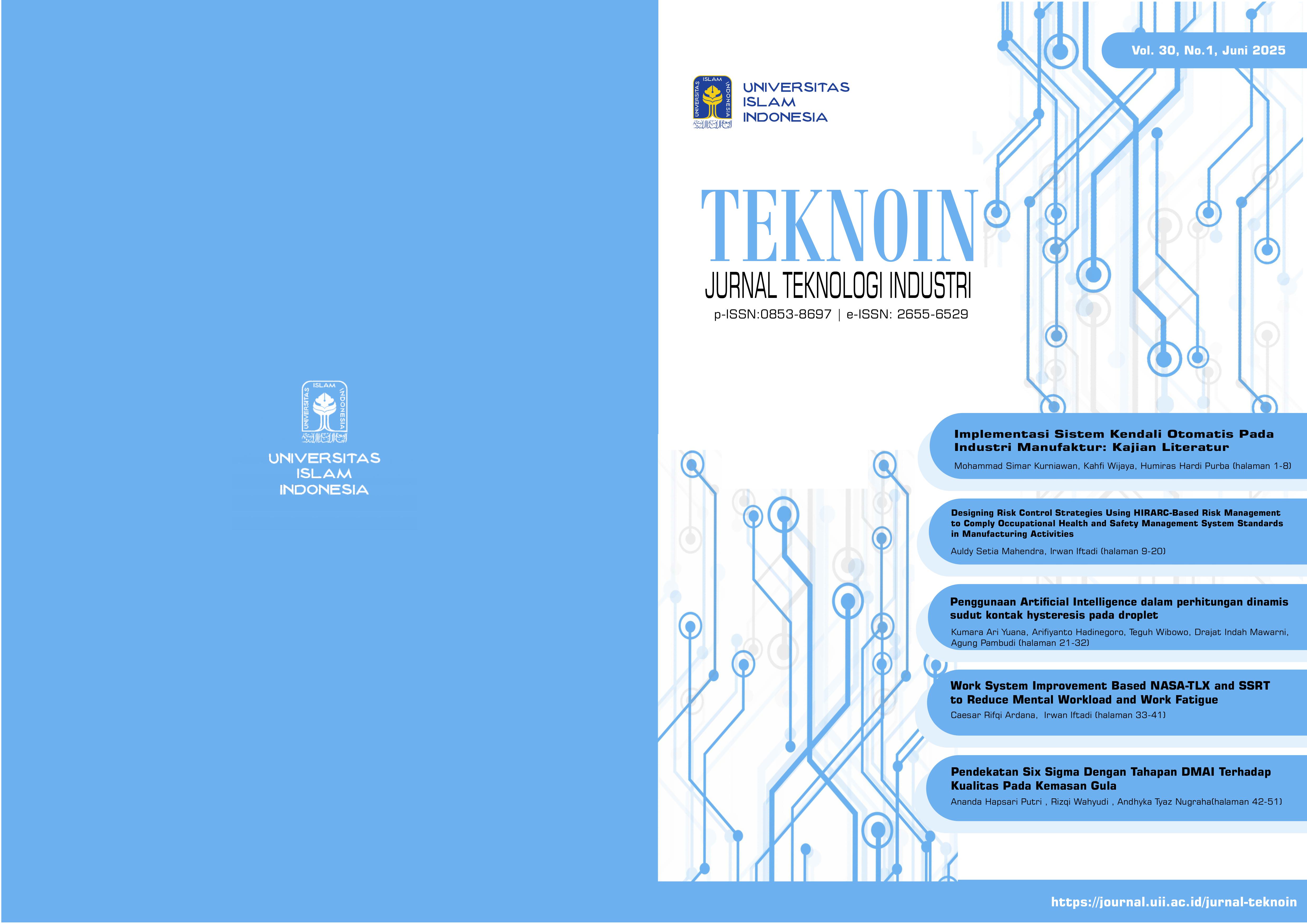
Sudut kontak hysteresis (SKH) adalah selisih antara sudut kontak maju (advancing) dan mundur (receding). Besaran ini merupakan indikator penting dalam karakterisasi kebasahan permukaan, yang berdampak pada berbagai aplikasi teknik dan industri seperti pendinginan semprot dan material anti-icing. Tujuan penelitian ini adalah untuk mengukur sudut kontak histeresis (SKH) pada permukaan logam panas menggunakan metode tumbukan droplet campuran air dan campuran etilen glikol (20%) yang direkam dengan kamera kecepatan tinggi (2000 fps). Penggunaan kamera berkecepatan tinggi menjanjikan kemampuan menangkap fenomena pergerakan tinggi tetapi memiliki keterbatasan-keterbatasan yang harus diselesaikan seperti noise dan thermal artifact. Untuk mengatasi noise citra akibat gerakan cepat dan thermal artifact, penelitian ini menerapkan pemrosesan citra berbasis kecerdasan buatan/artificial intelligence (AI) menggunakan arsitektur CNN (ResNet-18) dan GAN (ESRGAN). Hasil menunjukkan bahwa metode ini mampu meningkatkan kualitas citra dan akurasi pengukuran sudut kontak, dengan nilai rata-rata sudut kontak advancing sebesar 80,5°, receding sebesar 32,74° dan SKH 47,76°. Pendekatan ini menawarkan solusi efektif dan presisi tinggi dalam pengukuran SKH serta memberikan kontribusi terhadap pemodelan kebasahan permukaan pada sistem dinamis.
Keywords
Article Details
Copyright (c) 2025 Kumara Ari Yuana, Arifiyanto Hadinegoro, Teguh Wibowo, Drajat Indah Mawarni, Agung Pambudi

This work is licensed under a Creative Commons Attribution-ShareAlike 4.0 International License.
Authors who publish with this journal agree to the following terms:
- Authors retain copyright and grant the journal right of first publication with the work simultaneously licensed under a Creative Commons Attribution License that allows others to share the work with an acknowledgement of the work's authorship and initial publication in this journal.
- Authors are able to enter into separate, additional contractual arrangements for the non-exclusive distribution of the journal's published version of the work (e.g., post it to an institutional repository or publish it in a book), with an acknowledgement of its initial publication in this journal.
- Authors are permitted and encouraged to post their work online (e.g., in institutional repositories or on their website) prior to and during the submission process, as it can lead to productive exchanges, as well as earlier and greater citation of published work (See The Effect of Open Access).
References
Al, A., Alqahtani, M., Khan, A. I., Badi, A. Al, & Alqahtani, M. (2025). Explainable Artificial Intelligence for Computer Vision and Quantum Explainable Artificial Intelligence Computer Vision and Quantum Machine for Learning. 00.
Burton, J. C., Sharpe, A. L., Van Der Veen, R. C. A., Franco, A., & Nagel, S. R. (2012). Geometry of the vapor layer under a Leidenfrost drop. Physical Review Letters, 109(7). https://doi.org/10.1103/PhysRevLett.109.074301
Butt, H. J., Liu, J., Koynov, K., Straub, B., Hinduja, C., Roismann, I., Berger, R., Li, X., Vollmer, D., Steffen, W., & Kappl, M. (2022). Contact angle hysteresis. Current Opinion in Colloid and Interface Science, 59, 1–36. https://doi.org/10.1016/j.cocis.2022.101574
Feng, Y., Wang, Q., Su, Y., Ma, W., Du, G., Wu, J., Liu, J., & Wang, Y. (2025). Application of artificial intelligence-based computer vision methods in liver diseases: a bibliometric analysis. Intelligent Medicine, January 2024. https://doi.org/10.1016/j.imed.2024.09.008
Glocker, D. A. (1981). An investigation of the vapor cushion thickness, temperature, and vaporization time of leidenfrost drops frank.
Jin-li, Y., Bin, L., A-kun, Y., Zhao-xiang, S., Xia, W., Aiguo, O., & Yan-de, L. (2025). A generalized model for seed internal quality detection based on terahertz imaging technology combined with image compressed sensing and improved-real ESRGAN. Microchemical Journal, 208(December 2024). https://doi.org/10.1016/j.microc.2024.112410
Lei, D., Li, Y., Lin, M., & Wen, M. (2019). Model of Advancing and Receding Contact Angles on Rough Surfaces. Journal of Physical Chemistry C, 2025.
Liu, H., & Cao, G. (2016). Effectiveness of the Young-Laplace equation at nanoscale. Scientific Reports, 6, 1–10. https://doi.org/10.1038/srep23936
Mohammad Karim, A., Rothstein, J. P., & Kavehpour, H. P. (2018). Experimental study of dynamic contact angles on rough hydrophobic surfaces. Journal of Colloid and Interface Science, 513, 658–665. https://doi.org/10.1016/j.jcis.2017.11.075
Park, M., Shin, H., Ho, Y., & Ha, S. (2011). Open-Source-based Visualization of Flight Waypoint Tracking Using Flight Manipulation System. 2(2), 1–10.
Rohhila, S., & Singh, A. K. (2024). Deep learning-based encryption for secure transmission digital images: A survey. Computers and Electrical Engineering, 116(February). https://doi.org/10.1016/j.compeleceng.2024.109236
Sachdeva, S., Sharma, U., Rajput, P., & Singhal, R. (2025). Three-phased multi-scale residual-dense modified-U-Net architecture for deep image steganography. 123(April), 1–21.
Slama, A. Ben, Sahli, H., Amri, Y., & Trabelsi, H. (2023). Res-Net-VGG19: Improved tumor segmentation using MR images based on Res-Net architecture and efficient VGG gliomas grading. Applications in Engineering Science, 16(October). https://doi.org/10.1016/j.apples.2023.100153
Wang, F., Xiang, M., & Yang, W. (2024). Effects of contact angle hysteresis on frosting and defrosting characteristics on vertical superhydrophobic surfaces. Applied Thermal Engineering, 236(June 2023). https://doi.org/10.1016/j.applthermaleng.2023.121881
Wang, W., Xu, S., Wang, Y., & Chen, X. (2024). Contact angle hysteresis due to electric inhomogeneity of topographical patterning of dielectric layer in electrowetting. Colloids and Surfaces A: Physicochemical and Engineering Aspects, 699(November 2023). https://doi.org/10.1016/j.colsurfa.2024.134728
Wibowo, T., Widyatama, A., Kamal, S., Indarto, & Deendarlianto. (2021). The effect of ethylene glycol concentration on the interfacial dynamics of the successive droplets impacting onto a horizontal hot solid surface. International Journal of Thermal Sciences, 159(August 2020). https://doi.org/10.1016/j.ijthermalsci.2020.106594
Wu, B., Kang, Y., Lu, C., Shui, L., Ouyang, W., Peng, Q., He, Q., & Liu, Z. (2023). A Simple Method to Measure the Contact Angle of Metal Droplets on Graphite. Nanomanufacturing and Metrology, 6(1), 1–11. https://doi.org/10.1007/s41871-023-00207-4
Zhu, J., & Dai, X. (2019). A new model for contact angle hysteresis of superhydrophobic surface. AIP Advances, 9(6). https://doi.org/10.1063/1.5100548
References
Al, A., Alqahtani, M., Khan, A. I., Badi, A. Al, & Alqahtani, M. (2025). Explainable Artificial Intelligence for Computer Vision and Quantum Explainable Artificial Intelligence Computer Vision and Quantum Machine for Learning. 00.
Burton, J. C., Sharpe, A. L., Van Der Veen, R. C. A., Franco, A., & Nagel, S. R. (2012). Geometry of the vapor layer under a Leidenfrost drop. Physical Review Letters, 109(7). https://doi.org/10.1103/PhysRevLett.109.074301
Butt, H. J., Liu, J., Koynov, K., Straub, B., Hinduja, C., Roismann, I., Berger, R., Li, X., Vollmer, D., Steffen, W., & Kappl, M. (2022). Contact angle hysteresis. Current Opinion in Colloid and Interface Science, 59, 1–36. https://doi.org/10.1016/j.cocis.2022.101574
Feng, Y., Wang, Q., Su, Y., Ma, W., Du, G., Wu, J., Liu, J., & Wang, Y. (2025). Application of artificial intelligence-based computer vision methods in liver diseases: a bibliometric analysis. Intelligent Medicine, January 2024. https://doi.org/10.1016/j.imed.2024.09.008
Glocker, D. A. (1981). An investigation of the vapor cushion thickness, temperature, and vaporization time of leidenfrost drops frank.
Jin-li, Y., Bin, L., A-kun, Y., Zhao-xiang, S., Xia, W., Aiguo, O., & Yan-de, L. (2025). A generalized model for seed internal quality detection based on terahertz imaging technology combined with image compressed sensing and improved-real ESRGAN. Microchemical Journal, 208(December 2024). https://doi.org/10.1016/j.microc.2024.112410
Lei, D., Li, Y., Lin, M., & Wen, M. (2019). Model of Advancing and Receding Contact Angles on Rough Surfaces. Journal of Physical Chemistry C, 2025.
Liu, H., & Cao, G. (2016). Effectiveness of the Young-Laplace equation at nanoscale. Scientific Reports, 6, 1–10. https://doi.org/10.1038/srep23936
Mohammad Karim, A., Rothstein, J. P., & Kavehpour, H. P. (2018). Experimental study of dynamic contact angles on rough hydrophobic surfaces. Journal of Colloid and Interface Science, 513, 658–665. https://doi.org/10.1016/j.jcis.2017.11.075
Park, M., Shin, H., Ho, Y., & Ha, S. (2011). Open-Source-based Visualization of Flight Waypoint Tracking Using Flight Manipulation System. 2(2), 1–10.
Rohhila, S., & Singh, A. K. (2024). Deep learning-based encryption for secure transmission digital images: A survey. Computers and Electrical Engineering, 116(February). https://doi.org/10.1016/j.compeleceng.2024.109236
Sachdeva, S., Sharma, U., Rajput, P., & Singhal, R. (2025). Three-phased multi-scale residual-dense modified-U-Net architecture for deep image steganography. 123(April), 1–21.
Slama, A. Ben, Sahli, H., Amri, Y., & Trabelsi, H. (2023). Res-Net-VGG19: Improved tumor segmentation using MR images based on Res-Net architecture and efficient VGG gliomas grading. Applications in Engineering Science, 16(October). https://doi.org/10.1016/j.apples.2023.100153
Wang, F., Xiang, M., & Yang, W. (2024). Effects of contact angle hysteresis on frosting and defrosting characteristics on vertical superhydrophobic surfaces. Applied Thermal Engineering, 236(June 2023). https://doi.org/10.1016/j.applthermaleng.2023.121881
Wang, W., Xu, S., Wang, Y., & Chen, X. (2024). Contact angle hysteresis due to electric inhomogeneity of topographical patterning of dielectric layer in electrowetting. Colloids and Surfaces A: Physicochemical and Engineering Aspects, 699(November 2023). https://doi.org/10.1016/j.colsurfa.2024.134728
Wibowo, T., Widyatama, A., Kamal, S., Indarto, & Deendarlianto. (2021). The effect of ethylene glycol concentration on the interfacial dynamics of the successive droplets impacting onto a horizontal hot solid surface. International Journal of Thermal Sciences, 159(August 2020). https://doi.org/10.1016/j.ijthermalsci.2020.106594
Wu, B., Kang, Y., Lu, C., Shui, L., Ouyang, W., Peng, Q., He, Q., & Liu, Z. (2023). A Simple Method to Measure the Contact Angle of Metal Droplets on Graphite. Nanomanufacturing and Metrology, 6(1), 1–11. https://doi.org/10.1007/s41871-023-00207-4
Zhu, J., & Dai, X. (2019). A new model for contact angle hysteresis of superhydrophobic surface. AIP Advances, 9(6). https://doi.org/10.1063/1.5100548