
Article Sidebar
Main Article Content
Abstract
Purpose – This study aimed to analyze the implementation of productive waqf at the Syuhada Grand Mosque Foundation (YASMA) in Yogyakarta using the maqāṣid al-sharīʿah perspective with a systems approach. The analysis focuses on evaluating waqf governance, compliance with regulations, the mechanism for distributing benefits, and their impact on community welfare.
Methods – This study uses a qualitative approach with a case study on the management of productive waqf at the Syuhada Grand Mosque Foundation in Yogyakarta. Research data were obtained through documentation, observation, and interviews with waqf managers. The collected data were analyzed descriptively and analytically using a system-based maqāṣid al-sharīʿah framework.
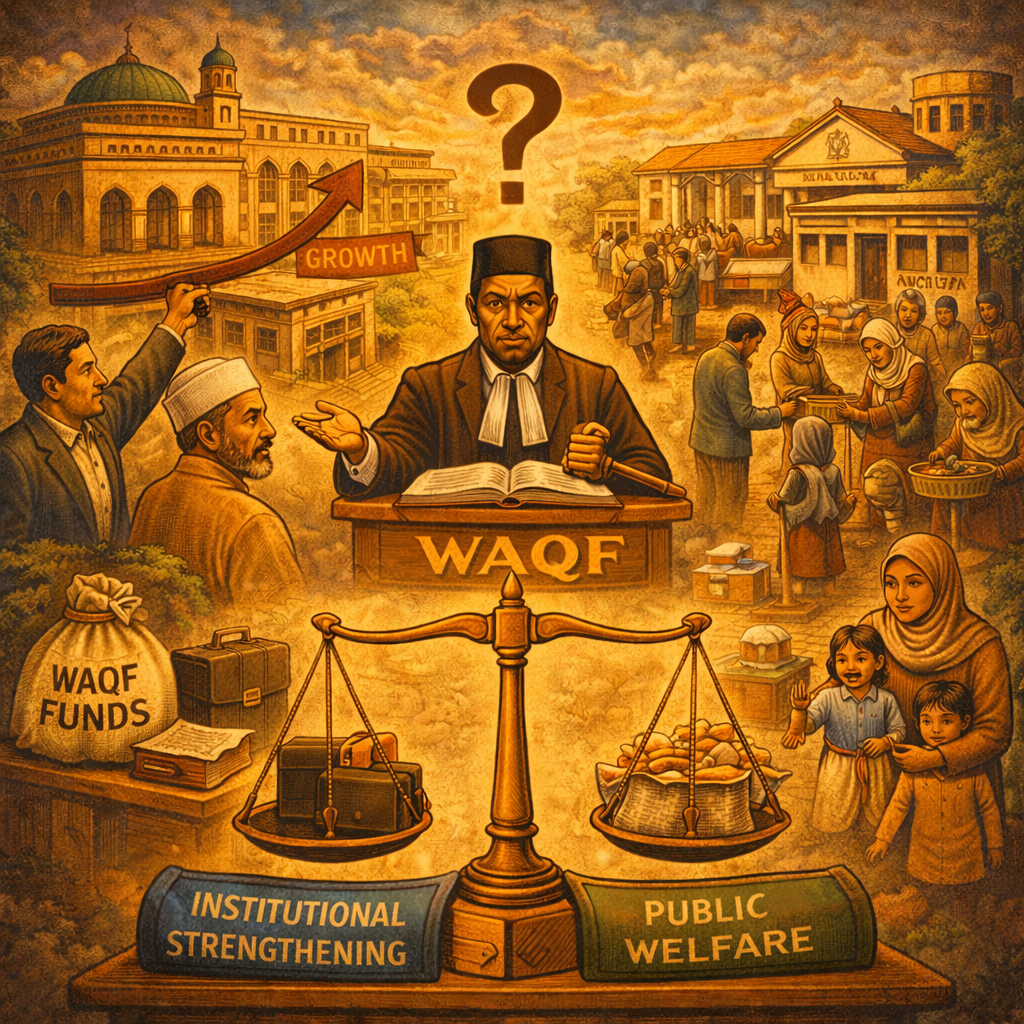
Findings – The results of the study show that productive waqf at YASMA is managed in the form of cash waqf and land waqf focused on the construction and development of infrastructure, such as the Syuhada Center, Islamic Educational Institutions, and Dormitories. Waqf management contributes to institutional sustainability, but it is still internal in nature and does not provide broad economic benefits to the surrounding community. The practice of waqf management is carried out through the principles of openness and multidimensionality by simultaneously integrating the objectives of Sharia (Islamic law), social, and economic aspects. However, the utilization of waqf still tends to be oriented towards strengthening internal institutions (protective-institutional) and has not yet fully developed into a model of social transformation that expands the distribution of community welfare (maqāṣid 'amah).
Research contribution/limitations – This study offers a more comprehensive community-based model of waqf institutional governance, benefit distribution, and its impact on community welfare. The limitations of this study lie in the case studies of local institutions; therefore, the findings cannot be fully generalized.
Originality/value – This study provides added value by presenting an empirical analysis of productive waqf management based on mosques and its contribution to social welfare.
Keywords
Article Details
Copyright (c) 2026 Muhammad Azkia Pasya , Mohammad Jamaludin, Maely Permatasari, Akbar Nur Wahid, Muhammad Taufik Hidayat

This work is licensed under a Creative Commons Attribution-ShareAlike 4.0 International License.
- Authors retain copyright and grant the journal right of first publication with the work simultaneously licensed under a Creative Commons Attribution License that allows others to share the work with an acknowledgement of the work's authorship and initial publication in this journal.
- Authors are able to enter into separate, additional contractual arrangements for the non-exclusive distribution of the journal's published version of the work (e.g., post it to an institutional repository or publish it in a book), with an acknowledgement of its initial publication in this journal.
- Authors are permitted and encouraged to post their work online (e.g., in institutional repositories or on their website) prior to and during the submission process, as it can lead to productive exchanges, as well as earlier and greater citation of published work.
References
- Adinugraha, H. H., Shulthoni, M., & Sain, Z. H. (2024). Transformation of Cash Waqf Management in Indonesia: Insights Into The Development of Digitalization. Review of Islamic Social Finance and Entrepreneurship, 50–66. https://doi.org/10.20885/RISFE.vol3.iss1.art4
- Ahyani, H., Muharir, & Mahfud, M. (2021). Sharia’s Economic Law Perspective About Cash Waqf In The Era of The Industrial Revolution Four Points Zero. Al-Mawarid Jurnal Syariah Dan Hukum (JSYH), 3(1), 12–25. https://doi.org/10.20885/mawarid.vol3.iss1.art2
- Asra, A., & Savitri, A. (2023). Optimization of Productive Waqf for Improving Community Economic Welfare. Jurnal Akuntansi Muhammadiyah, 13, 35–45. https://doi.org/10.37598/jam.v13i2.1895
- Asutay, M. (2013). Islamic moral economy as the foundation of Islamic finance. In V. Cattelan (Ed.), Islamic Finance in Europe. Edward Elgar Publishing. https://doi.org/10.4337/9781781002513.00014
- Auda, J. (2007). Maqashid Al-Shariah as Philoshophy of Islamic Law, Asystem Approach. The Internasional Intitute of Islamic Thought.
- BWI.go.id, R. (2025, August 8). Potensi 2000 Triliun, Ketua BWI: Wakaf Bisa Jadi Kunci Entaskan Kemiskinan. Badan Wakaf Indonesia | BWI.go.id. https://www.bwi.go.id/11426/2025/08/08/potensi-2000-triliun-ketua-bwi-wakaf-bisa-jadi-kunci-entaskan-kemiskinan/
- Cai, M., Caskey, G. W., Cowen, N., Murtazashvili, I., Murtazashvili, J. B., & Salahodjaev, R. (2022). Individualism, economic freedom, and charitable giving. Journal of Economic Behavior & Organization, 200, 868–884. https://doi.org/10.1016/j.jebo.2022.06.037
- Caniago, M. A. I., & Satibi, I. (2024). Prospects and Problems of Waqf in Indonesia. Al-Masharif: Jurnal Ilmu Ekonomi Dan Keislaman, 12(1), 1–12. https://doi.org/10.24952/masharif.v12i1.10884
- Çizakça, M. (2011). Islamic Capitalism and Finance: Origins, Evolution and the Future. Edward Elgar.
- Faaza, H. K., Haris, M., Hamzah, M. Z., Hadi, K., & Fahruroji, F. (2025). The Transformation of Islamic Philanthropy as an Economic Power: Multiplier Effect Cash Waqf Linked Deposit (CWLD) in Sharia Banking. Enrichment: Journal of Multidisciplinary Research and Development, 3(8), 3520–3530. https://doi.org/10.55324/enrichment.v3i8.553
- Fauzan, A., Amelia, E., & Prasetyowati, R. A. (2024). Strategy for Optimizing Nazir’s Role in Productive Waqf Management in Urban Community Environments. JED (Jurnal Etika Demokrasi), 9(1), 1–13. https://doi.org/10.26618/jed.v9i1.13510
- Fauzan, M. (2025). Productive Waqf and Efforts to Renew Waqf Law in the Jasser Auda System Approach. Proceeding of International Conference on Islamic and Interdisciplinary Studies, 4, 28–31.
- Hassan, M. K., & Lewis, M. K. (2007). Handbook of Islamic Banking. Edward Elgar.
- Hidayah, S. N. M. (2023). Empowerment of Waqf as Socio-Economic Development of Society (Analysis of Waqf as Social Responsibility in Islamic Organizations). ADZKIYA :Jurnal Hukum Dan Ekonomi Syariah, 11(1). https://doi.org/10.32332/adzkiya.v11i1.4325
- Iman, N., Santoso, A., & Kurniawan, E. (2021). Critical Assessment of the Productive Waqf Innovation Linkage Literature: Lessons for Waqf Asset Management Institutions in Indonesia. Review of International Geographical Education, 11(6).
- Iqbal, Z., & Mirakhor, A. (2013). Economic Development and Islamic Finance. World Bank Publications. https://ideas.repec.org/b/wbk/wbpubs/15787.html
- Ismail Abdel Mohsin, M. (2013). Financing through cash-waqf: A revitalization to finance different needs. International Journal of Islamic and Middle Eastern Finance and Management, 6(4), 304–321. https://doi.org/10.1108/IMEFM-08-2013-0094
- Jannah, N. M., Safitri, N., & Nilawati. (2025). Wakaf Produktif dalam Paradigma Hukum Ekonomi Syariah: Antara Keabadian Harta dan Produktivitas Sosial. Jurnal Intelektualita: Keislaman, Sosial Dan Sains, 14(1), 239–248. https://doi.org/10.19109/intelektualita.v14i1.28009
- Jasser Auda. (2008). Maqasid al-Shariah as philosophy of Islamic law: A systems approach (J. Auda, Ed.). The International Inst. of Islamic Thought.
- Judijanto, L., Hambali, H. R., Sani, A., Hendriyanto, H., & Ruhliandini, P. Z. (2025). Implementasi Undang-Undang Wakaf dalam Perspektif Hukum Islam: Studi Terhadap Efektivitas Pengelolaan Wakaf Produktif. Jurnal Al-Mizan, 12(1), 88–99.
- Kahf, M. (1998). Waqf and Its Sociopolitical Aspects,” Islamic Research and Training Institute Working Paper. Islamic Development Bank.
- Kamarubahrin, A. F., & Ahmed Ayedh, A. M. (2018). Critical Review on Waqf Experiences: Lessons from Muslim and Non-Muslim. IQTISHADIA, 11(2), 332. https://doi.org/10.21043/iqtishadia.v11i2.3272
- Karimah, D. A., Pamuncak, M. B., & Mubin, M. K. (2023). The Role of Waqf in Supporting Sustainable Development Goals: Linking theory and its practices. SUHUF, 35(2), 31–38. https://doi.org/10.23917/suhuf.v35i2.23018
- Lubis, I. S., & Marpaung, M. (2025). Reconstructing the Role of Waqf in Indonesia’s Islamic Financial Ecosystem: Institutional and Regulatory Analysis. International Journal of Management Research and Economics, 3(2), 174–199. https://doi.org/10.54066/ijmre-itb.v3i2.3179
- Lubis, I. S., Ramadhan, M., & Marliyah, M. (2025). Unlocking Idle Waqf Assets Through Institutionalized Pentahelix Collaboration: Evidence From North Sumatra, Indonesia. Journal of Islamic Economics Lariba, 11(2), 1115–1148. https://doi.org/10.20885/jielariba.vol11.iss2.art17
- Mahamood. (2011). Essential Readings in Contemporary Waqf Issues. CERT.
- Mashema, B. L., & Haruna, A. B. (2023). Role of Zakat and Waqf (Endowment) in Poverty Alleviation: A Solution to Insecurity and Challenges. RESEARCH JOURNAL OF HUMANITIES AND CULTURAL STUDIES, 9(1), 30–37. https://doi.org/10.56201/rjhcs.v9.no1.2023.pg30.37
- Maula, I. (2022). Cash Waqf in Normative and Economic Linkages. International Journal of Science and Society, 4(4), 710–721. https://doi.org/10.54783/ijsoc.v4i4.683
- Maulida, S. (2025). Analyzing The Efficiency and Productivity of Waqf Fund Management in Indonesia And Malaysia: A DEA And MPI Approach. Jurnal Ekonomi Dan Bisnis Islam (Journal of Islamic Economics and Business), 11(2), 376–402. https://doi.org/10.20473/jebis.v11i2.67947
- Minarni, M., Slamet, S., & Munir, M. (2025). A Qualitative Case Study on Productive Zakat and Pentahelix-Based Empowerment: Insights from BAZNAS Malang Regency. Journal of Islamic Economics Lariba, 11(1), 429–454. https://doi.org/10.20885/jielariba.vol11.iss1.art17
- Mohamed, I., Zikran, G., Nor, K. A. M., & Hamadou, I. (2024). Cash Waqf for Mosque Development: Engaging Every Citizen in a Perpetual Endowment. Ar-Raniry, 1(1).
- Mu’is, A., Farida, L., & Huda, A. M. (2022). Cash Waqf in Contemporary Islamic Law Perspective. Filantropi : Jurnal Manajemen Zakat Dan Wakaf, 3(1), 1–19. https://doi.org/10.22515/finalmazawa.v3i1.5454
- Mujahidin, M., Imran, M., Sapa, N. B., Fasiha, F., Aisya, S., & Trimulato, T. (2025). Challenge of Waqf to the Social and Economic Welfare of Muslim Communities: A Comparative Analysis Between Countries. Jurnal Ilmiah Mizani: Wacana Hukum, Ekonomi Dan Keagamaan, 12(1), 168–184. https://doi.org/10.29300/mzn.v12i1.7765
- Mulyani, H., Tiawarman, O. A., & Alfin, A. (2025). The Existence of Waqf in the Perspective of Classical Fiqh and National Law. ICIEFS Proceeding, 3, 143–148. https://doi.org/10.30983/iciefs.v3i1.915
- Mustofa, M., & Khotib, K. (2023). Mosque-Based Community Empowerment Model Through Productive Zakat Distribution BAZNAS East Java Province. Management of Zakat and Waqf Journal (MAZAWA), 4(2), 222–235. https://doi.org/10.15642/mzw.2023.4.2.222-235
- Nashuha, A. A., Muthoifin, & Elbanna, M. (2025). An Analysis of Jasser Auda’s Thought on Maqashid Sharia and Its Implications for Sharia Economic Law. Solo International Collaboration and Publication of Social Sciences and Humanities, 3(03), 441–456. https://doi.org/10.61455/sicopus.v3i03.361
- Oktarina, A., & Asnaini, A. (2018). Developing models of productive WAQF Masjid Agung Syuhada Yogyakarta. QIJIS (Qudus International Journal of Islamic Studies), 6, 103. https://doi.org/10.21043/qijis.v6i1.3719
- Rahman, Ĺ. R. (2025). Optimalisasi Wakaf Produktif sebagai Instrumen Keuangan Islam untuk Pembangunan Berkelanjutan. Jurnal Ilmiah Multidisiplin, 1(5).
- Supriatna, E., Syarif, D., Afrilia, A., Sundari, A., & Setia, P. (2024). A Waqf Empowerment Model Based on Benefit Analysis. Journal of Islamic Thought and Civilization, 14(1), 303–319. https://doi.org/10.32350/jitc.141.18
- Suriyati, A., Gustina, & Sumantri, R. (2026). The Role of Zakat and Waqf in the Development of Islamic Economics. TOFEDU: The Future of Education Journal, 5(1). https://doi.org/10.61445/tofedu.v5i1.1350
- Widiastuti, T., Ningsih, S., Prasetyo, A., Mawardi, I., Herianingrum, S., Robani, A., Al Mustofa, M. U., & Hady, A. F. (2022). Developing an integrated model of Islamic social finance: Toward an effective governance framework. Heliyon, 8(9), e10383. https://doi.org/10.1016/j.heliyon.2022.e10383
- Zainur, Muhammad Yafiz, & Yenni Samri Juliati Nasution. (2025). Wakafpreneur as an Instrument of Islamic Da’wah and Social Transformation in the Philanthropic Institution. MUHARRIK: Jurnal Dakwah Dan Sosial, 8(2). https://ejournal.insuriponorogo.ac.id/index.php/muharrik/article/view/7853
- Zulkipli, Z., Basit, A., & Wajdi, F. (2025). The Strategic Role Of Zakat And Waqf In Sustainable Poverty Alleviation: A Literature Review From The Perspective Of Islamic Economics. Islamic Banking : Jurnal Pemikiran Dan Pengembangan Perbankan Syariah, 11(1), 17–32. https://doi.org/10.36908/isbank.v11i1.1486
References
Adinugraha, H. H., Shulthoni, M., & Sain, Z. H. (2024). Transformation of Cash Waqf Management in Indonesia: Insights Into The Development of Digitalization. Review of Islamic Social Finance and Entrepreneurship, 50–66. https://doi.org/10.20885/RISFE.vol3.iss1.art4
Ahyani, H., Muharir, & Mahfud, M. (2021). Sharia’s Economic Law Perspective About Cash Waqf In The Era of The Industrial Revolution Four Points Zero. Al-Mawarid Jurnal Syariah Dan Hukum (JSYH), 3(1), 12–25. https://doi.org/10.20885/mawarid.vol3.iss1.art2
Asra, A., & Savitri, A. (2023). Optimization of Productive Waqf for Improving Community Economic Welfare. Jurnal Akuntansi Muhammadiyah, 13, 35–45. https://doi.org/10.37598/jam.v13i2.1895
Asutay, M. (2013). Islamic moral economy as the foundation of Islamic finance. In V. Cattelan (Ed.), Islamic Finance in Europe. Edward Elgar Publishing. https://doi.org/10.4337/9781781002513.00014
Auda, J. (2007). Maqashid Al-Shariah as Philoshophy of Islamic Law, Asystem Approach. The Internasional Intitute of Islamic Thought.
BWI.go.id, R. (2025, August 8). Potensi 2000 Triliun, Ketua BWI: Wakaf Bisa Jadi Kunci Entaskan Kemiskinan. Badan Wakaf Indonesia | BWI.go.id. https://www.bwi.go.id/11426/2025/08/08/potensi-2000-triliun-ketua-bwi-wakaf-bisa-jadi-kunci-entaskan-kemiskinan/
Cai, M., Caskey, G. W., Cowen, N., Murtazashvili, I., Murtazashvili, J. B., & Salahodjaev, R. (2022). Individualism, economic freedom, and charitable giving. Journal of Economic Behavior & Organization, 200, 868–884. https://doi.org/10.1016/j.jebo.2022.06.037
Caniago, M. A. I., & Satibi, I. (2024). Prospects and Problems of Waqf in Indonesia. Al-Masharif: Jurnal Ilmu Ekonomi Dan Keislaman, 12(1), 1–12. https://doi.org/10.24952/masharif.v12i1.10884
Çizakça, M. (2011). Islamic Capitalism and Finance: Origins, Evolution and the Future. Edward Elgar.
Faaza, H. K., Haris, M., Hamzah, M. Z., Hadi, K., & Fahruroji, F. (2025). The Transformation of Islamic Philanthropy as an Economic Power: Multiplier Effect Cash Waqf Linked Deposit (CWLD) in Sharia Banking. Enrichment: Journal of Multidisciplinary Research and Development, 3(8), 3520–3530. https://doi.org/10.55324/enrichment.v3i8.553
Fauzan, A., Amelia, E., & Prasetyowati, R. A. (2024). Strategy for Optimizing Nazir’s Role in Productive Waqf Management in Urban Community Environments. JED (Jurnal Etika Demokrasi), 9(1), 1–13. https://doi.org/10.26618/jed.v9i1.13510
Fauzan, M. (2025). Productive Waqf and Efforts to Renew Waqf Law in the Jasser Auda System Approach. Proceeding of International Conference on Islamic and Interdisciplinary Studies, 4, 28–31.
Hassan, M. K., & Lewis, M. K. (2007). Handbook of Islamic Banking. Edward Elgar.
Hidayah, S. N. M. (2023). Empowerment of Waqf as Socio-Economic Development of Society (Analysis of Waqf as Social Responsibility in Islamic Organizations). ADZKIYA :Jurnal Hukum Dan Ekonomi Syariah, 11(1). https://doi.org/10.32332/adzkiya.v11i1.4325
Iman, N., Santoso, A., & Kurniawan, E. (2021). Critical Assessment of the Productive Waqf Innovation Linkage Literature: Lessons for Waqf Asset Management Institutions in Indonesia. Review of International Geographical Education, 11(6).
Iqbal, Z., & Mirakhor, A. (2013). Economic Development and Islamic Finance. World Bank Publications. https://ideas.repec.org/b/wbk/wbpubs/15787.html
Ismail Abdel Mohsin, M. (2013). Financing through cash-waqf: A revitalization to finance different needs. International Journal of Islamic and Middle Eastern Finance and Management, 6(4), 304–321. https://doi.org/10.1108/IMEFM-08-2013-0094
Jannah, N. M., Safitri, N., & Nilawati. (2025). Wakaf Produktif dalam Paradigma Hukum Ekonomi Syariah: Antara Keabadian Harta dan Produktivitas Sosial. Jurnal Intelektualita: Keislaman, Sosial Dan Sains, 14(1), 239–248. https://doi.org/10.19109/intelektualita.v14i1.28009
Jasser Auda. (2008). Maqasid al-Shariah as philosophy of Islamic law: A systems approach (J. Auda, Ed.). The International Inst. of Islamic Thought.
Judijanto, L., Hambali, H. R., Sani, A., Hendriyanto, H., & Ruhliandini, P. Z. (2025). Implementasi Undang-Undang Wakaf dalam Perspektif Hukum Islam: Studi Terhadap Efektivitas Pengelolaan Wakaf Produktif. Jurnal Al-Mizan, 12(1), 88–99.
Kahf, M. (1998). Waqf and Its Sociopolitical Aspects,” Islamic Research and Training Institute Working Paper. Islamic Development Bank.
Kamarubahrin, A. F., & Ahmed Ayedh, A. M. (2018). Critical Review on Waqf Experiences: Lessons from Muslim and Non-Muslim. IQTISHADIA, 11(2), 332. https://doi.org/10.21043/iqtishadia.v11i2.3272
Karimah, D. A., Pamuncak, M. B., & Mubin, M. K. (2023). The Role of Waqf in Supporting Sustainable Development Goals: Linking theory and its practices. SUHUF, 35(2), 31–38. https://doi.org/10.23917/suhuf.v35i2.23018
Lubis, I. S., & Marpaung, M. (2025). Reconstructing the Role of Waqf in Indonesia’s Islamic Financial Ecosystem: Institutional and Regulatory Analysis. International Journal of Management Research and Economics, 3(2), 174–199. https://doi.org/10.54066/ijmre-itb.v3i2.3179
Lubis, I. S., Ramadhan, M., & Marliyah, M. (2025). Unlocking Idle Waqf Assets Through Institutionalized Pentahelix Collaboration: Evidence From North Sumatra, Indonesia. Journal of Islamic Economics Lariba, 11(2), 1115–1148. https://doi.org/10.20885/jielariba.vol11.iss2.art17
Mahamood. (2011). Essential Readings in Contemporary Waqf Issues. CERT.
Mashema, B. L., & Haruna, A. B. (2023). Role of Zakat and Waqf (Endowment) in Poverty Alleviation: A Solution to Insecurity and Challenges. RESEARCH JOURNAL OF HUMANITIES AND CULTURAL STUDIES, 9(1), 30–37. https://doi.org/10.56201/rjhcs.v9.no1.2023.pg30.37
Maula, I. (2022). Cash Waqf in Normative and Economic Linkages. International Journal of Science and Society, 4(4), 710–721. https://doi.org/10.54783/ijsoc.v4i4.683
Maulida, S. (2025). Analyzing The Efficiency and Productivity of Waqf Fund Management in Indonesia And Malaysia: A DEA And MPI Approach. Jurnal Ekonomi Dan Bisnis Islam (Journal of Islamic Economics and Business), 11(2), 376–402. https://doi.org/10.20473/jebis.v11i2.67947
Minarni, M., Slamet, S., & Munir, M. (2025). A Qualitative Case Study on Productive Zakat and Pentahelix-Based Empowerment: Insights from BAZNAS Malang Regency. Journal of Islamic Economics Lariba, 11(1), 429–454. https://doi.org/10.20885/jielariba.vol11.iss1.art17
Mohamed, I., Zikran, G., Nor, K. A. M., & Hamadou, I. (2024). Cash Waqf for Mosque Development: Engaging Every Citizen in a Perpetual Endowment. Ar-Raniry, 1(1).
Mu’is, A., Farida, L., & Huda, A. M. (2022). Cash Waqf in Contemporary Islamic Law Perspective. Filantropi : Jurnal Manajemen Zakat Dan Wakaf, 3(1), 1–19. https://doi.org/10.22515/finalmazawa.v3i1.5454
Mujahidin, M., Imran, M., Sapa, N. B., Fasiha, F., Aisya, S., & Trimulato, T. (2025). Challenge of Waqf to the Social and Economic Welfare of Muslim Communities: A Comparative Analysis Between Countries. Jurnal Ilmiah Mizani: Wacana Hukum, Ekonomi Dan Keagamaan, 12(1), 168–184. https://doi.org/10.29300/mzn.v12i1.7765
Mulyani, H., Tiawarman, O. A., & Alfin, A. (2025). The Existence of Waqf in the Perspective of Classical Fiqh and National Law. ICIEFS Proceeding, 3, 143–148. https://doi.org/10.30983/iciefs.v3i1.915
Mustofa, M., & Khotib, K. (2023). Mosque-Based Community Empowerment Model Through Productive Zakat Distribution BAZNAS East Java Province. Management of Zakat and Waqf Journal (MAZAWA), 4(2), 222–235. https://doi.org/10.15642/mzw.2023.4.2.222-235
Nashuha, A. A., Muthoifin, & Elbanna, M. (2025). An Analysis of Jasser Auda’s Thought on Maqashid Sharia and Its Implications for Sharia Economic Law. Solo International Collaboration and Publication of Social Sciences and Humanities, 3(03), 441–456. https://doi.org/10.61455/sicopus.v3i03.361
Oktarina, A., & Asnaini, A. (2018). Developing models of productive WAQF Masjid Agung Syuhada Yogyakarta. QIJIS (Qudus International Journal of Islamic Studies), 6, 103. https://doi.org/10.21043/qijis.v6i1.3719
Rahman, Ĺ. R. (2025). Optimalisasi Wakaf Produktif sebagai Instrumen Keuangan Islam untuk Pembangunan Berkelanjutan. Jurnal Ilmiah Multidisiplin, 1(5).
Supriatna, E., Syarif, D., Afrilia, A., Sundari, A., & Setia, P. (2024). A Waqf Empowerment Model Based on Benefit Analysis. Journal of Islamic Thought and Civilization, 14(1), 303–319. https://doi.org/10.32350/jitc.141.18
Suriyati, A., Gustina, & Sumantri, R. (2026). The Role of Zakat and Waqf in the Development of Islamic Economics. TOFEDU: The Future of Education Journal, 5(1). https://doi.org/10.61445/tofedu.v5i1.1350
Widiastuti, T., Ningsih, S., Prasetyo, A., Mawardi, I., Herianingrum, S., Robani, A., Al Mustofa, M. U., & Hady, A. F. (2022). Developing an integrated model of Islamic social finance: Toward an effective governance framework. Heliyon, 8(9), e10383. https://doi.org/10.1016/j.heliyon.2022.e10383
Zainur, Muhammad Yafiz, & Yenni Samri Juliati Nasution. (2025). Wakafpreneur as an Instrument of Islamic Da’wah and Social Transformation in the Philanthropic Institution. MUHARRIK: Jurnal Dakwah Dan Sosial, 8(2). https://ejournal.insuriponorogo.ac.id/index.php/muharrik/article/view/7853
Zulkipli, Z., Basit, A., & Wajdi, F. (2025). The Strategic Role Of Zakat And Waqf In Sustainable Poverty Alleviation: A Literature Review From The Perspective Of Islamic Economics. Islamic Banking : Jurnal Pemikiran Dan Pengembangan Perbankan Syariah, 11(1), 17–32. https://doi.org/10.36908/isbank.v11i1.1486