
Article Sidebar
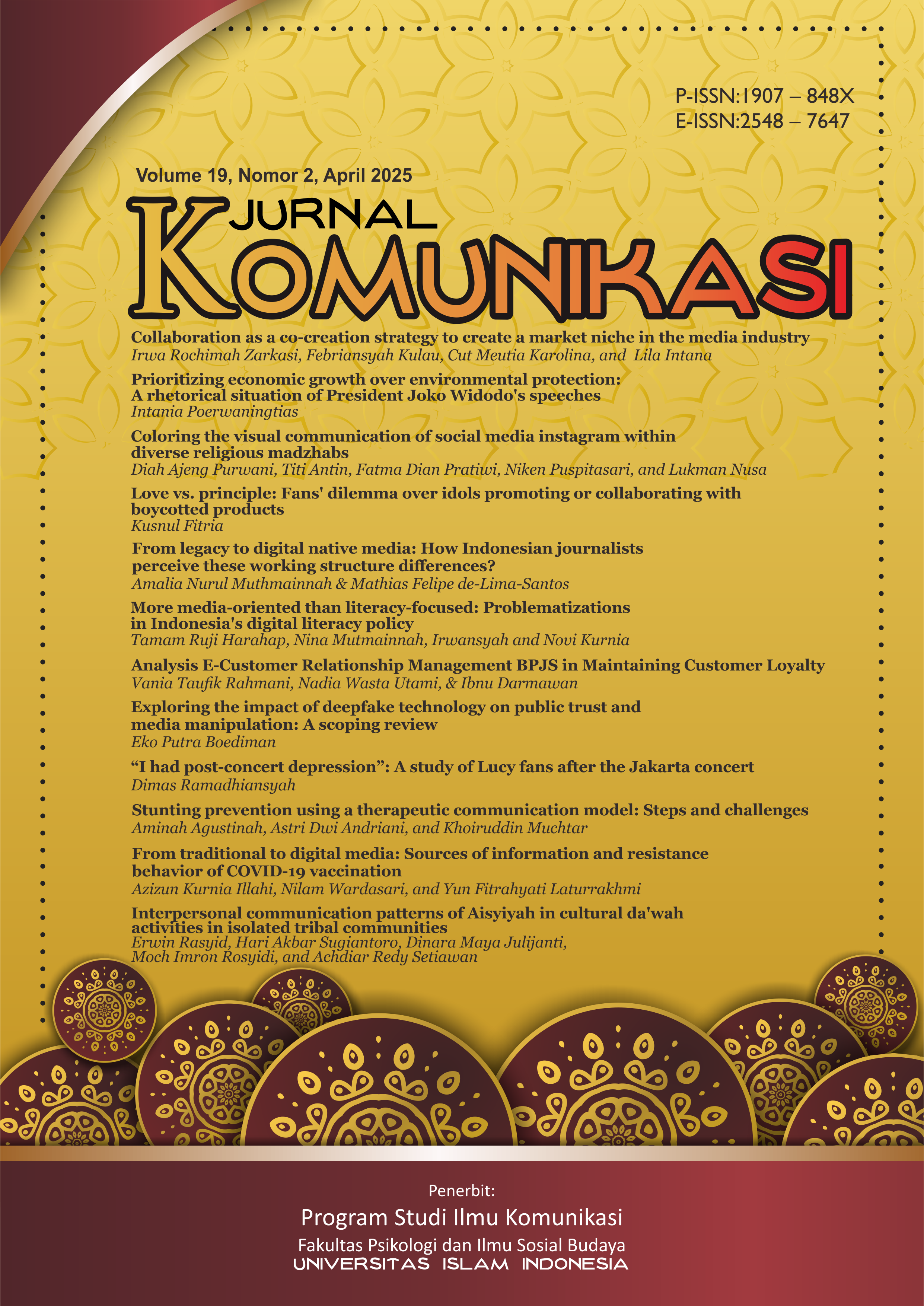
Main Article Content
Abstract
The study aims to map rural communities’ attitudes and acceptance of the COVID-19 vaccine, examine the sources of information they rely on, and analyze the communication networks formed among vaccine-resistant groups. Findings reveal a balance between digital and conventional information sources in accessing COVID-19-related information, supported by sufficient human resources and infrastructure in certain areas. Social media and television emerge as the dominant sources of vaccine-related information, indicating high exposure to media content. Meanwhile, healthcare workers, health cadres, and government institutions serve as secondary sources of information. Notably, word-of-mouth remains a significant channel for spreading misinformation, contributing to high acceptance of hoax messages and reinforcing vaccine resistance within the rural community of Tawangsari.
Keywords
Article Details
Copyright (c) 2025 Nilam Wardasari, Azizun Kurnia Illahi, Yun Fitrahyati Laturrakhmi

This work is licensed under a Creative Commons Attribution-ShareAlike 4.0 International License.
Authors who publish with this journal agree to the following terms:
- Authors retain copyright and grant the journal right of first publication with the work simultaneously licensed under a Creative Commons Attribution License that allows others to share the work with an acknowledgement of the work's authorship and initial publication in this journal.
- Authors are able to enter into separate, additional contractual arrangements for the non-exclusive distribution of the journal's published version of the work (e.g., post it to an institutional repository or publish it in a book), with an acknowledgement of its initial publication in this journal.
- Authors are permitted and encouraged to post their work online (e.g., in institutional repositories or on their website) prior to and during the submission process, as it can lead to productive exchanges, as well as earlier and greater citation of published work (See The Effect of Open Access).




References
- Allsop, D. T., Bassett, B. R., & Hoskins, J. A. (2007). Word-of-Mouth Research: Principles and Applications. Journal of Advertising Research, 47(4), 398–411. https://doi.org/10.2501/S0021849907070419
- Austvoll-Dahlgren, A., & Helseth, S. (2010). What informs parents’ decision-making about childhood vaccinations? Journal of Advanced Nursing, 66(11), 2421–2430. https://doi.org/10.1111/j.1365-2648.2010.05403.x
- Darmastuti, R., Bajari, A., Martodirdjo, H. S., & Maryani, E. (2016). Gethok Tular, Pola Komunikasi Gerakan Sosial Berbasis Kearifan Lokal Masyarakat Samin di Sukolilo. Jurnal ASPIKOM, 3(1), 104. https://doi.org/10.24329/aspikom.v3i1.103
- Eller, N. M., Henrikson, N. B., & Opel, D. J. (2019). Vaccine Information Sources and Parental Trust in Their Child’s Health Care Provider. Health Education & Behavior, 46(3), 445–453. https://doi.org/10.1177/1090198118819716
- Garcia-Cosavalente, H. P., Wood, L. E., & Obregon, R. (2010). Health information seeking behavior among rural and urban Peruvians: variations in information resource access and preferences. Information Development, 26(1), 37–45. https://doi.org/10.1177/0266666909358640
- GitHub. (2021). No Title.
- Jackson, D. N., Peterson, E. B., Blake, K. D., Coa, K., & Chou, W.-Y. S. (2019). Americans’ Trust in Health Information Sources: Trends and Sociodemographic Predictors. American Journal of Health Promotion, 33(8), 1187–1193. https://doi.org/10.1177/0890117119861280
- Kemkes RI. (2020a). Buku stratgei komuniasi vaksin COVID-19. Kemkes.Go.Id. https://promkes.kemkes.go.id/
- Kemkes RI. (2020b). Survei Penerimaan Vaksin COVID-19 di Indonesia. https://covid19.go.id/storage/app/media/Hasil Kajian/2020/November/vaccine-acceptance-survey-id-12-11-2020final.pdf
- Kennedy, A., Basket, M., & Sheedy, K. (2011). Vaccine Attitudes, Concerns, and Information Sources Reported by Parents of Young Children: Results From the 2009 HealthStyles Survey. PEDIATRICS, 127(Supplement), S92–S99. https://doi.org/10.1542/peds.2010-1722N
- Khr/nma. (2021). Empat Timeline Vaksinasi RI Hingga Maret 2022. CNN Indonesia. https://www.cnnindonesia.com/nasional/20210104202651-20-589405/empat-timeline-vaksinasi-ri-hingga-maret-2022
- Miles, M. B., Huberman, A. M., & Saldaña, J. (2014). Qualitative data analysis: A methods sourcebook (3rd ed.). Thousand Oaks, CA: Sage.
- Nyhan, B., Reifler, J., Richey, S., & Freed, G. L. (2014). Effective Messages in Vaccine Promotion: A Randomized Trial. PEDIATRICS, 133(4), e835–e842. https://doi.org/10.1542/peds.2013-2365
- Rachman, F. F., & Pramana, S. (2020). Analisis Sentimen Pro dan Kontra Masyarakat Indonesia tentang Vaksin COVID-19 pada Media Sosial Twitter. Indonesian of Health Information Management Journal, 8(2), 100–1009. https://doi.org/10.47007/inohim.v8i2.223
- Ring, A., Tkaczynski, A., & Dolnicar, S. (2016). Word-of-Mouth Segments. Journal of Travel Research, 55(4), 481–492. https://doi.org/10.1177/0047287514563165
- Schiavo, R. (2007). Health Communication: From Theory to Practice (1st ed.). San Francisco: Jossey-Bass.
- Sharun, K., Rahman, C. K. F., Haritha, C. V., Jose, B., Tiwari, R., & Dhama, K. (2020). COVID-19 Vaccine Acceptance: Beliefs and Barriers Associated with Vaccination Among the General Population in India. Journal of Experimental Biology and Agricultural Sciences, 8(Spl-1-SARS-CoV-2), S210–S218. https://doi.org/10.18006/2020.8(Spl-1-SARS-CoV-2).S210.S218
- Sweeney, J. C., Soutar, G. N., & Mazzarol, T. (2012). Word of mouth: measuring the power of individual messages. European Journal of Marketing, 46(1/2), 237–257. https://doi.org/10.1108/03090561211189310
- Thomas, R. K. (2006). Health Communication. Boston: Springer US. https://doi.org/10.1007/b136859
- Williams, T. A., & Shepherd, D. A. (2017). Mixed Method Social Network Analysis. Organizational Research Methods, 20(2), 268–298. https://doi.org/10.1177/1094428115610807
References
Allsop, D. T., Bassett, B. R., & Hoskins, J. A. (2007). Word-of-Mouth Research: Principles and Applications. Journal of Advertising Research, 47(4), 398–411. https://doi.org/10.2501/S0021849907070419
Austvoll-Dahlgren, A., & Helseth, S. (2010). What informs parents’ decision-making about childhood vaccinations? Journal of Advanced Nursing, 66(11), 2421–2430. https://doi.org/10.1111/j.1365-2648.2010.05403.x
Darmastuti, R., Bajari, A., Martodirdjo, H. S., & Maryani, E. (2016). Gethok Tular, Pola Komunikasi Gerakan Sosial Berbasis Kearifan Lokal Masyarakat Samin di Sukolilo. Jurnal ASPIKOM, 3(1), 104. https://doi.org/10.24329/aspikom.v3i1.103
Eller, N. M., Henrikson, N. B., & Opel, D. J. (2019). Vaccine Information Sources and Parental Trust in Their Child’s Health Care Provider. Health Education & Behavior, 46(3), 445–453. https://doi.org/10.1177/1090198118819716
Garcia-Cosavalente, H. P., Wood, L. E., & Obregon, R. (2010). Health information seeking behavior among rural and urban Peruvians: variations in information resource access and preferences. Information Development, 26(1), 37–45. https://doi.org/10.1177/0266666909358640
GitHub. (2021). No Title.
Jackson, D. N., Peterson, E. B., Blake, K. D., Coa, K., & Chou, W.-Y. S. (2019). Americans’ Trust in Health Information Sources: Trends and Sociodemographic Predictors. American Journal of Health Promotion, 33(8), 1187–1193. https://doi.org/10.1177/0890117119861280
Kemkes RI. (2020a). Buku stratgei komuniasi vaksin COVID-19. Kemkes.Go.Id. https://promkes.kemkes.go.id/
Kemkes RI. (2020b). Survei Penerimaan Vaksin COVID-19 di Indonesia. https://covid19.go.id/storage/app/media/Hasil Kajian/2020/November/vaccine-acceptance-survey-id-12-11-2020final.pdf
Kennedy, A., Basket, M., & Sheedy, K. (2011). Vaccine Attitudes, Concerns, and Information Sources Reported by Parents of Young Children: Results From the 2009 HealthStyles Survey. PEDIATRICS, 127(Supplement), S92–S99. https://doi.org/10.1542/peds.2010-1722N
Khr/nma. (2021). Empat Timeline Vaksinasi RI Hingga Maret 2022. CNN Indonesia. https://www.cnnindonesia.com/nasional/20210104202651-20-589405/empat-timeline-vaksinasi-ri-hingga-maret-2022
Miles, M. B., Huberman, A. M., & Saldaña, J. (2014). Qualitative data analysis: A methods sourcebook (3rd ed.). Thousand Oaks, CA: Sage.
Nyhan, B., Reifler, J., Richey, S., & Freed, G. L. (2014). Effective Messages in Vaccine Promotion: A Randomized Trial. PEDIATRICS, 133(4), e835–e842. https://doi.org/10.1542/peds.2013-2365
Rachman, F. F., & Pramana, S. (2020). Analisis Sentimen Pro dan Kontra Masyarakat Indonesia tentang Vaksin COVID-19 pada Media Sosial Twitter. Indonesian of Health Information Management Journal, 8(2), 100–1009. https://doi.org/10.47007/inohim.v8i2.223
Ring, A., Tkaczynski, A., & Dolnicar, S. (2016). Word-of-Mouth Segments. Journal of Travel Research, 55(4), 481–492. https://doi.org/10.1177/0047287514563165
Schiavo, R. (2007). Health Communication: From Theory to Practice (1st ed.). San Francisco: Jossey-Bass.
Sharun, K., Rahman, C. K. F., Haritha, C. V., Jose, B., Tiwari, R., & Dhama, K. (2020). COVID-19 Vaccine Acceptance: Beliefs and Barriers Associated with Vaccination Among the General Population in India. Journal of Experimental Biology and Agricultural Sciences, 8(Spl-1-SARS-CoV-2), S210–S218. https://doi.org/10.18006/2020.8(Spl-1-SARS-CoV-2).S210.S218
Sweeney, J. C., Soutar, G. N., & Mazzarol, T. (2012). Word of mouth: measuring the power of individual messages. European Journal of Marketing, 46(1/2), 237–257. https://doi.org/10.1108/03090561211189310
Thomas, R. K. (2006). Health Communication. Boston: Springer US. https://doi.org/10.1007/b136859
Williams, T. A., & Shepherd, D. A. (2017). Mixed Method Social Network Analysis. Organizational Research Methods, 20(2), 268–298. https://doi.org/10.1177/1094428115610807