
Article Sidebar
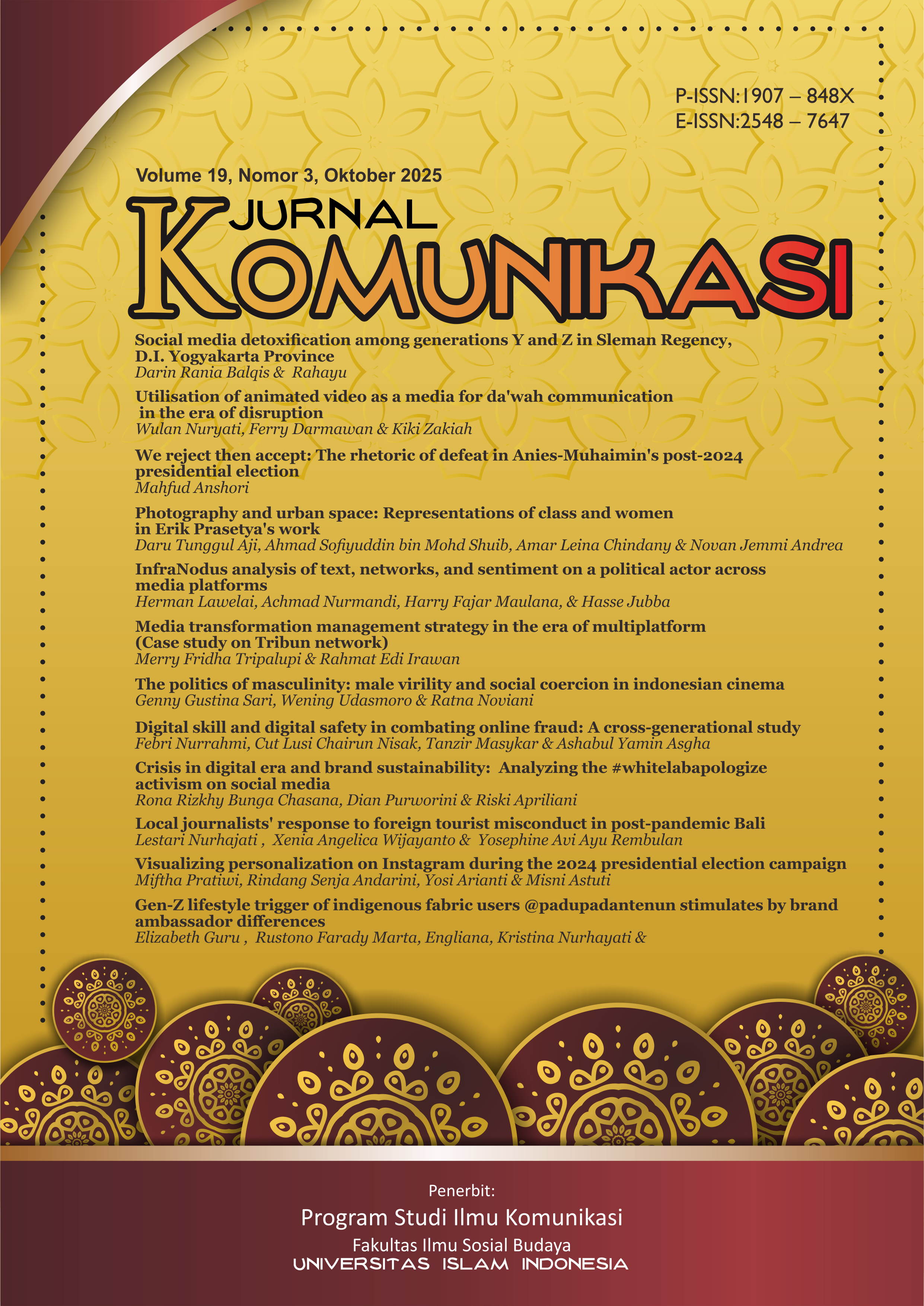
Main Article Content
Abstract
The digital era has transformed political communication by positioning social media, particularly Instagram, as a strategic platform for political actors to build personal branding and foster emotional connections with voters. However, academic studies on the use of visual strategies by presidential and vice-presidential candidates during political campaigns remain relatively limited. This study examines how Indonesia’s 2024 presidential and vice-presidential candidates used Instagram for personal branding, focusing on visual content to build voter support. Qualitative analysis of 2540 Instagram posts revealed three dominant dimensions of personal branding—style, competence, and standard—reflected in 15 themes, including public interaction, political campaigns, family orientation, achievements, and values. Results show that the style dimension — particularly public interaction and campaign activities — dominated image-building strategies, with candidate pair Anies Baswedan-Muhaimin Iskandar leading uploads in style and competence. At the same time, Ganjar Pranowo was strong in public interaction themes. Prabowo Subianto-Gibran Rakabuming emphasized achievements, cultural themes, and the celebration of memorable moments. These findings demonstrate that Instagram visuals were strategically used to highlight uniqueness, strengthen credibility, and foster emotional resonance with voters, underscoring the central role of visual branding in influencing voter behavior.
Keywords
Article Details
Copyright (c) 2025 Miftha Pratiwi, Rindang Senja Andarini, Yosi Arianti, Misni Astuti

This work is licensed under a Creative Commons Attribution-ShareAlike 4.0 International License.
Authors who publish with this journal agree to the following terms:
- Authors retain copyright and grant the journal right of first publication with the work simultaneously licensed under a Creative Commons Attribution License that allows others to share the work with an acknowledgement of the work's authorship and initial publication in this journal.
- Authors are able to enter into separate, additional contractual arrangements for the non-exclusive distribution of the journal's published version of the work (e.g., post it to an institutional repository or publish it in a book), with an acknowledgement of its initial publication in this journal.
- Authors are permitted and encouraged to post their work online (e.g., in institutional repositories or on their website) prior to and during the submission process, as it can lead to productive exchanges, as well as earlier and greater citation of published work (See The Effect of Open Access).




References
- Basuki, K., & Jimmy, J. (2022). The Effect of Digital Marketing and Personal Branding on Consumer Purchase Decisions of Culinary MSMEs in Jakarta Moderated Consumer Perception. Budapest International Research and Critics Institute-Journal (BIRCI-Journal), 5(2). https://doi.org/10.33258/birci.v5i2.5378
- Beers, S. (2014). Shallow or Rational Public Spheres? Indonesian Political Parties in the Twitter-Sphere. SEARCH: The Journal of the South East Asia Research Centre for Communication and Humanities, 6(2), 1. https://doi.org/10.7603/s40931-014-0001-8
- Chen, H. M., & Chung, H. M. (2016). How to Measure Personal Brand of a Business CEO. Journal of Human Resource and Sustainability Studies, 04(04), 305–324. https://doi.org/10.4236/jhrss.2016.44030
- Dimitrova, D. V., Shehata, A., Strömbäck, J., & Nord, L. W. (2014). The Effects of Digital Media on Political Knowledge and Participation in Election Campaigns. Communication Research, 41(1), 95–118. https://doi.org/10.1177/0093650211426004
- Glucksman, M. (2017). The Rise of Social Media Influencer Marketing on Lifestyle Branding: A Case Study of Lucie Fink. Elon Journal of Undergraduate Research in Communications, 8(2), 77–87.
- Gorbatov, S., Khapova, S. N., & Lysova, E. I. (2018a). Personal Branding: Interdisciplinary Systematic Review and Research Agenda. Frontiers in Psychology, 9. https://doi.org/10.3389/fpsyg.2018.02238
- Gorbatov, S., Khapova, S. N., & Lysova, E. I. (2018b). Personal branding: Interdisciplinary systematic review and research agenda. In Frontiers in Psychology (Vol. 9, Issue NOV). Frontiers Media S.A. https://doi.org/10.3389/fpsyg.2018.02238
- Hadjira, S., & Suranto, S. (2023). Personal Political Branding: Strategi Kampanye Ganjar Pranowo Untuk Pilpres 2024 di Social Media Twitter. Jurnal Komunikatif, 12(2), 181–199. https://doi.org/10.33508/jk.v12i2.4907
- Hämäläinen, K. (2017). DISCOURSE ANALYSIS OF THE PERSONAL BRAND CONSTRUCTION OF A GROUP OF FINNISH MANAGERS ON TWITTER. Jyväskylä University.
- Hatmanti, G. A. P. N. Y., & Ahmad, N. (2023). Politisi dengan Tingkat Elektarbilitas Rendah dan Strategi Branding Politik: Analisis Multimodalitas Akun Instagram Puan Maharani. Jurnal Komunikasi Profesi, 7(4), 583–611. http://ejournal.unitomo.ac.id/index.php/jkp
- Hwang, Y. N., Suh, S. Y., Kim, Y., & Yoo, J.-W. (2019). Comparative analysis of perception of organization–public relationships in Chinese and Korean newspapers. Social Behavior and Personality, 47(5). https://doi.org/10.2224/sbp.7854
- Martikasari, A., & Id, A. (2023). Photographing Ganjar Pranowo’s Efforts to Build Personal Branding Through a Multi-Platform Strategy Perspective on Social Media. Online) Sospol: Jurnal Sosial Politik, 9(1), 34–48. https://doi.org/10.22219/jurnalsospol.v9i1.25818
- McCrae, R. R., & Costa, P. T. (1987). Validation of the five-factor model of personality across instruments and observers. Journal of Personality and Social Psychology, 52(1), 81–90. https://doi.org/10.1037/0022-3514.52.1.81
- McNally, David, Speak, & Karl D. (2011). More Praise for Be Your Own Brand.
- Md Saad, N. H., & Yaacob, Z. (2021a). Building a Personal Brand as a CEO: A Case Study of Vivy Yusof, the Cofounder of FashionValet and the dUCk Group. SAGE Open, 11(3). https://doi.org/10.1177/21582440211030274
- Md Saad, N. H., & Yaacob, Z. (2021b). Building a Personal Brand as a CEO: A Case Study of Vivy Yusof, the Cofounder of FashionValet and the dUCk Group. SAGE Open, 11(3), 215824402110302. https://doi.org/10.1177/21582440211030274
- Molyneux, L. (2019). A Personalized Self-image: Gender and Branding Practices Among Journalists. Social Media + Society, 5(3), 205630511987295. https://doi.org/10.1177/2056305119872950
- Musdalifah, F. S., Nasyaya, A., Pratiwi, M., Jurusan, ), & Komunikasi, I. (n.d.). Media Sosial dan Politisi Perempuan di Indonesia: Analisis Konten Pada Sembilan Akun Instagram Perempuan Anggota Legislatif.
- Oparaugo, B. (2021). MEDIA AND POLITICS: POLITICAL COMMUNICATION IN THE DIGITAL AGE. International Journal of Multidisciplinary Research and Explorer (IJMRE), 1(2), 14–23.
- Parengkuan, E., & Tumewu, B. (2014). PERSONAL BRAND-INC: Rahasia untuk Sukses dan Bertahan di Karir. Gramedia Pustaka Utama.
- Prihatini, E. S. (2020). Women and social media during legislative elections in Indonesia. Women’s Studies International Forum, 83, 102417. https://doi.org/10.1016/j.wsif.2020.102417
- Rheault, L., Rayment, E., & Musulan, A. (2019). Politicians in the line of fire: Incivility and the treatment of women on social media. Research & Politics, 6(1), 205316801881622. https://doi.org/10.1177/2053168018816228
- Schlægera, J. (2013). E-government in China: Technology, power and local government reform. In E-Government in China: Technology, Power and Local Government Reform. Taylor and Francis. https://doi.org/10.4324/9780203760550
- Suddaby, R. (2010). Editor’s Comments: Construct Clarity in Theories of Management and Organization. Academy of Management Review, 35(3), 346–357. https://doi.org/10.5465/amr.35.3.zok346
- Suryawati, I. (2021). POLITICAL BRANDING GUBERNUR INDONESIA MELALUI MEDIA SOSIAL. MEDIALOG: Jurnal Ilmu Komunikasi, IV.
- Venciute, D., April Yue, C., & Thelen, P. D. (2024). Leaders’ personal branding and communication on professional social media platforms: motivations, processes, and outcomes. Journal of Brand Management, 31(1), 38–57. https://doi.org/10.1057/s41262-023-00332-x
- Yin, R. K. (2014). Case Study Research: Design and Methods (Applied Social Research Methods) (Fifth Edition). SAGE Publication Inc.
- Yuliaty, K., Putri, S., & Bimantoro, A. A. (2020). ANALISIS PERSONAL BRANDING RUBEN ONSU MELALUI INSTAGRAM (Studi Deskriptif Pada Akun Instagram @GeprekBensu). In JIKE (Vol. 4, Issue 1).
References
Basuki, K., & Jimmy, J. (2022). The Effect of Digital Marketing and Personal Branding on Consumer Purchase Decisions of Culinary MSMEs in Jakarta Moderated Consumer Perception. Budapest International Research and Critics Institute-Journal (BIRCI-Journal), 5(2). https://doi.org/10.33258/birci.v5i2.5378
Beers, S. (2014). Shallow or Rational Public Spheres? Indonesian Political Parties in the Twitter-Sphere. SEARCH: The Journal of the South East Asia Research Centre for Communication and Humanities, 6(2), 1. https://doi.org/10.7603/s40931-014-0001-8
Chen, H. M., & Chung, H. M. (2016). How to Measure Personal Brand of a Business CEO. Journal of Human Resource and Sustainability Studies, 04(04), 305–324. https://doi.org/10.4236/jhrss.2016.44030
Dimitrova, D. V., Shehata, A., Strömbäck, J., & Nord, L. W. (2014). The Effects of Digital Media on Political Knowledge and Participation in Election Campaigns. Communication Research, 41(1), 95–118. https://doi.org/10.1177/0093650211426004
Glucksman, M. (2017). The Rise of Social Media Influencer Marketing on Lifestyle Branding: A Case Study of Lucie Fink. Elon Journal of Undergraduate Research in Communications, 8(2), 77–87.
Gorbatov, S., Khapova, S. N., & Lysova, E. I. (2018a). Personal Branding: Interdisciplinary Systematic Review and Research Agenda. Frontiers in Psychology, 9. https://doi.org/10.3389/fpsyg.2018.02238
Gorbatov, S., Khapova, S. N., & Lysova, E. I. (2018b). Personal branding: Interdisciplinary systematic review and research agenda. In Frontiers in Psychology (Vol. 9, Issue NOV). Frontiers Media S.A. https://doi.org/10.3389/fpsyg.2018.02238
Hadjira, S., & Suranto, S. (2023). Personal Political Branding: Strategi Kampanye Ganjar Pranowo Untuk Pilpres 2024 di Social Media Twitter. Jurnal Komunikatif, 12(2), 181–199. https://doi.org/10.33508/jk.v12i2.4907
Hämäläinen, K. (2017). DISCOURSE ANALYSIS OF THE PERSONAL BRAND CONSTRUCTION OF A GROUP OF FINNISH MANAGERS ON TWITTER. Jyväskylä University.
Hatmanti, G. A. P. N. Y., & Ahmad, N. (2023). Politisi dengan Tingkat Elektarbilitas Rendah dan Strategi Branding Politik: Analisis Multimodalitas Akun Instagram Puan Maharani. Jurnal Komunikasi Profesi, 7(4), 583–611. http://ejournal.unitomo.ac.id/index.php/jkp
Hwang, Y. N., Suh, S. Y., Kim, Y., & Yoo, J.-W. (2019). Comparative analysis of perception of organization–public relationships in Chinese and Korean newspapers. Social Behavior and Personality, 47(5). https://doi.org/10.2224/sbp.7854
Martikasari, A., & Id, A. (2023). Photographing Ganjar Pranowo’s Efforts to Build Personal Branding Through a Multi-Platform Strategy Perspective on Social Media. Online) Sospol: Jurnal Sosial Politik, 9(1), 34–48. https://doi.org/10.22219/jurnalsospol.v9i1.25818
McCrae, R. R., & Costa, P. T. (1987). Validation of the five-factor model of personality across instruments and observers. Journal of Personality and Social Psychology, 52(1), 81–90. https://doi.org/10.1037/0022-3514.52.1.81
McNally, David, Speak, & Karl D. (2011). More Praise for Be Your Own Brand.
Md Saad, N. H., & Yaacob, Z. (2021a). Building a Personal Brand as a CEO: A Case Study of Vivy Yusof, the Cofounder of FashionValet and the dUCk Group. SAGE Open, 11(3). https://doi.org/10.1177/21582440211030274
Md Saad, N. H., & Yaacob, Z. (2021b). Building a Personal Brand as a CEO: A Case Study of Vivy Yusof, the Cofounder of FashionValet and the dUCk Group. SAGE Open, 11(3), 215824402110302. https://doi.org/10.1177/21582440211030274
Molyneux, L. (2019). A Personalized Self-image: Gender and Branding Practices Among Journalists. Social Media + Society, 5(3), 205630511987295. https://doi.org/10.1177/2056305119872950
Musdalifah, F. S., Nasyaya, A., Pratiwi, M., Jurusan, ), & Komunikasi, I. (n.d.). Media Sosial dan Politisi Perempuan di Indonesia: Analisis Konten Pada Sembilan Akun Instagram Perempuan Anggota Legislatif.
Oparaugo, B. (2021). MEDIA AND POLITICS: POLITICAL COMMUNICATION IN THE DIGITAL AGE. International Journal of Multidisciplinary Research and Explorer (IJMRE), 1(2), 14–23.
Parengkuan, E., & Tumewu, B. (2014). PERSONAL BRAND-INC: Rahasia untuk Sukses dan Bertahan di Karir. Gramedia Pustaka Utama.
Prihatini, E. S. (2020). Women and social media during legislative elections in Indonesia. Women’s Studies International Forum, 83, 102417. https://doi.org/10.1016/j.wsif.2020.102417
Rheault, L., Rayment, E., & Musulan, A. (2019). Politicians in the line of fire: Incivility and the treatment of women on social media. Research & Politics, 6(1), 205316801881622. https://doi.org/10.1177/2053168018816228
Schlægera, J. (2013). E-government in China: Technology, power and local government reform. In E-Government in China: Technology, Power and Local Government Reform. Taylor and Francis. https://doi.org/10.4324/9780203760550
Suddaby, R. (2010). Editor’s Comments: Construct Clarity in Theories of Management and Organization. Academy of Management Review, 35(3), 346–357. https://doi.org/10.5465/amr.35.3.zok346
Suryawati, I. (2021). POLITICAL BRANDING GUBERNUR INDONESIA MELALUI MEDIA SOSIAL. MEDIALOG: Jurnal Ilmu Komunikasi, IV.
Venciute, D., April Yue, C., & Thelen, P. D. (2024). Leaders’ personal branding and communication on professional social media platforms: motivations, processes, and outcomes. Journal of Brand Management, 31(1), 38–57. https://doi.org/10.1057/s41262-023-00332-x
Yin, R. K. (2014). Case Study Research: Design and Methods (Applied Social Research Methods) (Fifth Edition). SAGE Publication Inc.
Yuliaty, K., Putri, S., & Bimantoro, A. A. (2020). ANALISIS PERSONAL BRANDING RUBEN ONSU MELALUI INSTAGRAM (Studi Deskriptif Pada Akun Instagram @GeprekBensu). In JIKE (Vol. 4, Issue 1).