
Article Sidebar
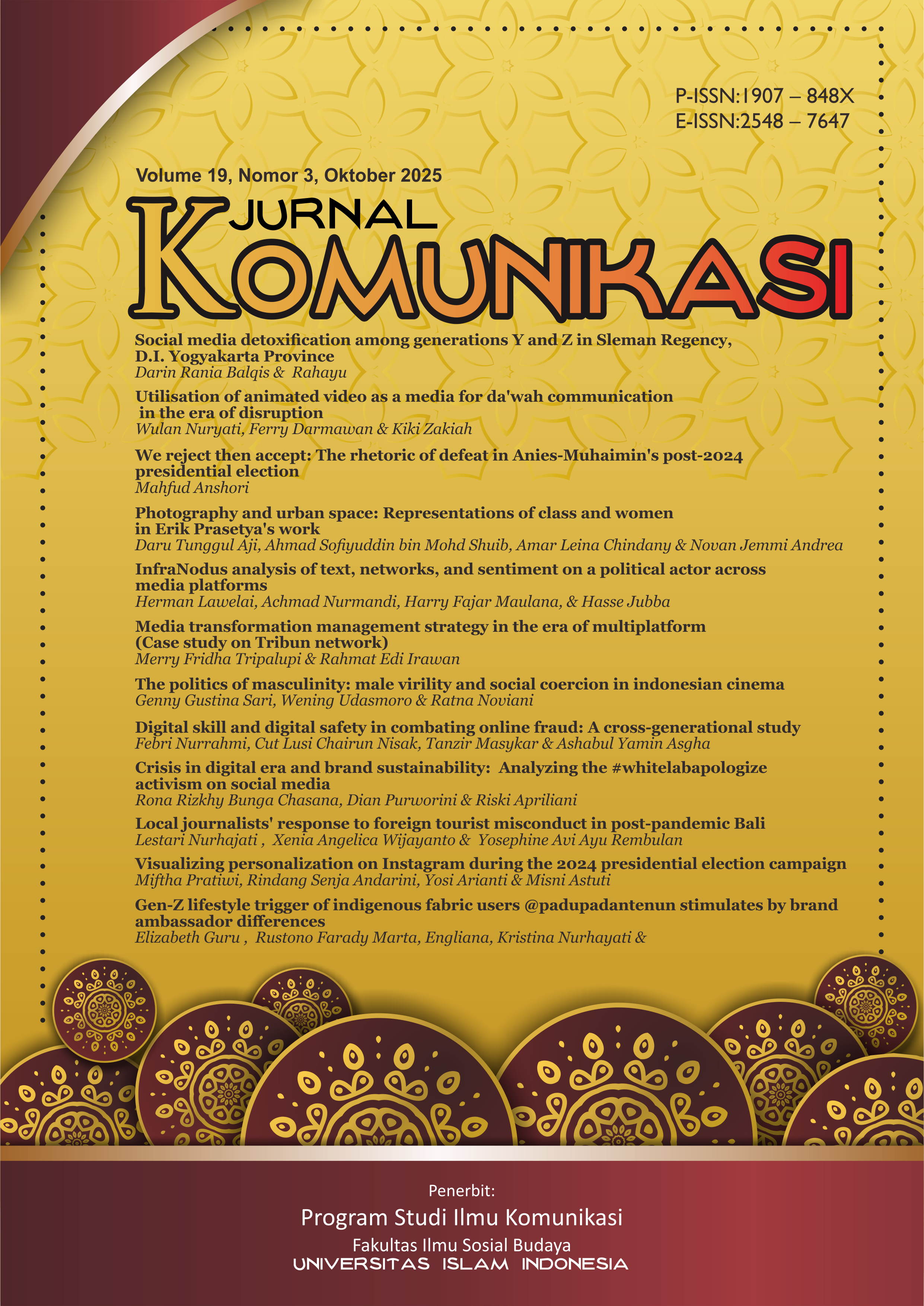
Main Article Content
Abstract
The emergence of Bali as a world tourist destination has been accompanied by a series of problems involving misconduct by foreign tourists. This paper examines how local journalists cope with these issues whilst managing professional ethics, political, and economic pressures. The qualitative approach enabled data collection through Focus Group Discussions (FGDs) with four print journalists and one television journalist. The results indicate that tourist violations are not novel but have become apparent due to the amplification of social media and the following news reporting. The primary roles of journalists include acting as watchdogs, exposing ineffective law enforcement, educating people about norms and visa policies, and addressing community concerns. However, these functions are limited by output requirements, financial reliance, and sensitivities surrounding the safeguarding of Bali's tourism image. Such tension illustrates that ethical journalism can be difficult in a society that relies on tourism.
Keywords
Article Details
Copyright (c) 2025 Lestari Nurhajati, Xenia Angelica Wijayanto, Yosephine Avi Ayu Rembulan

This work is licensed under a Creative Commons Attribution-ShareAlike 4.0 International License.
Authors who publish with this journal agree to the following terms:
- Authors retain copyright and grant the journal right of first publication with the work simultaneously licensed under a Creative Commons Attribution License that allows others to share the work with an acknowledgement of the work's authorship and initial publication in this journal.
- Authors are able to enter into separate, additional contractual arrangements for the non-exclusive distribution of the journal's published version of the work (e.g., post it to an institutional repository or publish it in a book), with an acknowledgement of its initial publication in this journal.
- Authors are permitted and encouraged to post their work online (e.g., in institutional repositories or on their website) prior to and during the submission process, as it can lead to productive exchanges, as well as earlier and greater citation of published work (See The Effect of Open Access).




References
- Ali, C., & Puppis, M. (2018). When the watchdog neither barks nor bites: Communication as a
- power resource in media policy and regulation. Communication Theory, 28(3), 270-
- Boateng, W. (2012). Evaluating the efficacy of focus group discussion (FGD) in qualitative
- social research. International Journal of Business and Social Science, 3(7).
- Boynton, G. R., & Richardson Jr, G. W. (2016). Agenda setting in the twenty-first
- century. New Media & Society, 18(9), 1916-1934.
- Deacon, D., & Stanyer, J. (2014). Mediatization: Key concept or conceptual
- bandwagon?. Media, culture & society, 36(7), 1032-1044.
- Dodds, R., & Butler, R. W. (2019). Overtourism: Issues, Realities and Solutions. De Gruyter.
- García-Orosa, B., Pérez-Seijo, S., & Vizoso, Á. (2022). Emerging practices in the age of
- automated digital journalism. London: Routledge.
- Guo, L., & McCombs, M. (Eds.). (2016). The power of information networks: New directions
- for agenda setting. Routledge.
- Hamid, S. A. (2016). Pengaruh media massa terhadap perubahan sosial masyarakat. e-
- BANGI, 11, 214-226.
- Hanitzsch, T., & Vos, T. P. (2018). Journalism Beyond Democracy: A New Look Into
- Journalistic Roles in Political and Everyday Life. Oxford University Press.
- Hepp, A., Hjarvard, S., & Lundby, K. (2015). Mediatization: theorizing the interplay between media, culture and society. Media, culture & society, 37(2), 314-324.
- Johnson, D. E. (2014). The mass media's dual role:‘watchdog’and guardian of their own
- interests. Journal of Public Affairs, 14(3-4), 369-378.
- Karadimitriou, A., von Krogh, T., Ruggiero, C., Biancalana, C., Bomba, M., & Lo, W. H. (2022).
- Investigative journalism and the watchdog role of news media: Between acute
- challenges and exceptional counterbalances.
- Khatimah, H. (2018). Posisi dan peran media dalam kehidupan masyarakat. Tasamuh, 16(1),
- -138.
- Lunt, P., & Livingstone, S. (2016). Is ‘mediatization’the new paradigm for our field? A
- commentary on Deacon and Stanyer (2014, 2015) and Hepp, Hjarvard and Lundby
- (2015). Media, Culture & Society, 38(3), 462-470
- McCombs, M. E., Shaw, D. L., & Weaver, D. H. (2014). New directions in agenda-setting
- theory and research. Mass communication and society, 17(6), 781-802
- Norio, E. (2021). Why are tourist resorts attractive for transnational crime? The case of the
- Mayan Riviera. Tourism Critiques: Practice and Theory, 2(1), 38-73.
- Norris, P. (2014). Watchdog journalism. The Oxford Handbook of Public Accountability.
- Patton, M. Q. (2015). Qualitative research & evaluation methods: Integrating theory and
- practice. Sage publications.
- Protess, D., & McCombs, M. E. (2016). Agenda setting: Readings on media, public opinion,
- and policymaking. Routledge.
- Palmer, R., Toff, B., & Nielsen, R. K. (2020). “The media covers up a lot of things”: Watchdog
- ideals meet folk theories of journalism. Journalism Studies, 21(14), 1973-1989.
- Ritonga, R. (2021). Rontoknya independensi pers cetak dan online di Kota Medan. Jurnal
- Kajian Komunikasi, 9(1), 26-39.
- Sarkawi, D. (2016). Perubahan Sosial dan Budaya Akibat Media Sosial. Jurnal Administrasi
- Kantor, 4(2), 307-338.
- Seraphin, H., Sheeran, P., & Pilato, M. (2020). Overtourism and Tourism Education: A
- Strategy for Sustainable Tourism Futures. Springer.
- Straubhaar, J., LaRose, R., & Davenport, L. (2015). Media now: Understanding media,
- culture, and technology. Cengage Learning.
- Winseck, D. (2011). The political economies of media and the transformation of the global
- media industries. The political economies of media: The transformation of the global media industries
- Yoga, S. (2019). Perubahan sosial budaya masyarakat indonesia dan perkembangan
- teknologi komunikasi. Jurnal Al-Bayan: Media Kajian dan Pengembangan Ilmu
- Dakwah, 24(1).
References
Ali, C., & Puppis, M. (2018). When the watchdog neither barks nor bites: Communication as a
power resource in media policy and regulation. Communication Theory, 28(3), 270-
Boateng, W. (2012). Evaluating the efficacy of focus group discussion (FGD) in qualitative
social research. International Journal of Business and Social Science, 3(7).
Boynton, G. R., & Richardson Jr, G. W. (2016). Agenda setting in the twenty-first
century. New Media & Society, 18(9), 1916-1934.
Deacon, D., & Stanyer, J. (2014). Mediatization: Key concept or conceptual
bandwagon?. Media, culture & society, 36(7), 1032-1044.
Dodds, R., & Butler, R. W. (2019). Overtourism: Issues, Realities and Solutions. De Gruyter.
García-Orosa, B., Pérez-Seijo, S., & Vizoso, Á. (2022). Emerging practices in the age of
automated digital journalism. London: Routledge.
Guo, L., & McCombs, M. (Eds.). (2016). The power of information networks: New directions
for agenda setting. Routledge.
Hamid, S. A. (2016). Pengaruh media massa terhadap perubahan sosial masyarakat. e-
BANGI, 11, 214-226.
Hanitzsch, T., & Vos, T. P. (2018). Journalism Beyond Democracy: A New Look Into
Journalistic Roles in Political and Everyday Life. Oxford University Press.
Hepp, A., Hjarvard, S., & Lundby, K. (2015). Mediatization: theorizing the interplay between media, culture and society. Media, culture & society, 37(2), 314-324.
Johnson, D. E. (2014). The mass media's dual role:‘watchdog’and guardian of their own
interests. Journal of Public Affairs, 14(3-4), 369-378.
Karadimitriou, A., von Krogh, T., Ruggiero, C., Biancalana, C., Bomba, M., & Lo, W. H. (2022).
Investigative journalism and the watchdog role of news media: Between acute
challenges and exceptional counterbalances.
Khatimah, H. (2018). Posisi dan peran media dalam kehidupan masyarakat. Tasamuh, 16(1),
-138.
Lunt, P., & Livingstone, S. (2016). Is ‘mediatization’the new paradigm for our field? A
commentary on Deacon and Stanyer (2014, 2015) and Hepp, Hjarvard and Lundby
(2015). Media, Culture & Society, 38(3), 462-470
McCombs, M. E., Shaw, D. L., & Weaver, D. H. (2014). New directions in agenda-setting
theory and research. Mass communication and society, 17(6), 781-802
Norio, E. (2021). Why are tourist resorts attractive for transnational crime? The case of the
Mayan Riviera. Tourism Critiques: Practice and Theory, 2(1), 38-73.
Norris, P. (2014). Watchdog journalism. The Oxford Handbook of Public Accountability.
Patton, M. Q. (2015). Qualitative research & evaluation methods: Integrating theory and
practice. Sage publications.
Protess, D., & McCombs, M. E. (2016). Agenda setting: Readings on media, public opinion,
and policymaking. Routledge.
Palmer, R., Toff, B., & Nielsen, R. K. (2020). “The media covers up a lot of things”: Watchdog
ideals meet folk theories of journalism. Journalism Studies, 21(14), 1973-1989.
Ritonga, R. (2021). Rontoknya independensi pers cetak dan online di Kota Medan. Jurnal
Kajian Komunikasi, 9(1), 26-39.
Sarkawi, D. (2016). Perubahan Sosial dan Budaya Akibat Media Sosial. Jurnal Administrasi
Kantor, 4(2), 307-338.
Seraphin, H., Sheeran, P., & Pilato, M. (2020). Overtourism and Tourism Education: A
Strategy for Sustainable Tourism Futures. Springer.
Straubhaar, J., LaRose, R., & Davenport, L. (2015). Media now: Understanding media,
culture, and technology. Cengage Learning.
Winseck, D. (2011). The political economies of media and the transformation of the global
media industries. The political economies of media: The transformation of the global media industries
Yoga, S. (2019). Perubahan sosial budaya masyarakat indonesia dan perkembangan
teknologi komunikasi. Jurnal Al-Bayan: Media Kajian dan Pengembangan Ilmu
Dakwah, 24(1).