Article Sidebar
Downloads
Main Article Content
Abstract
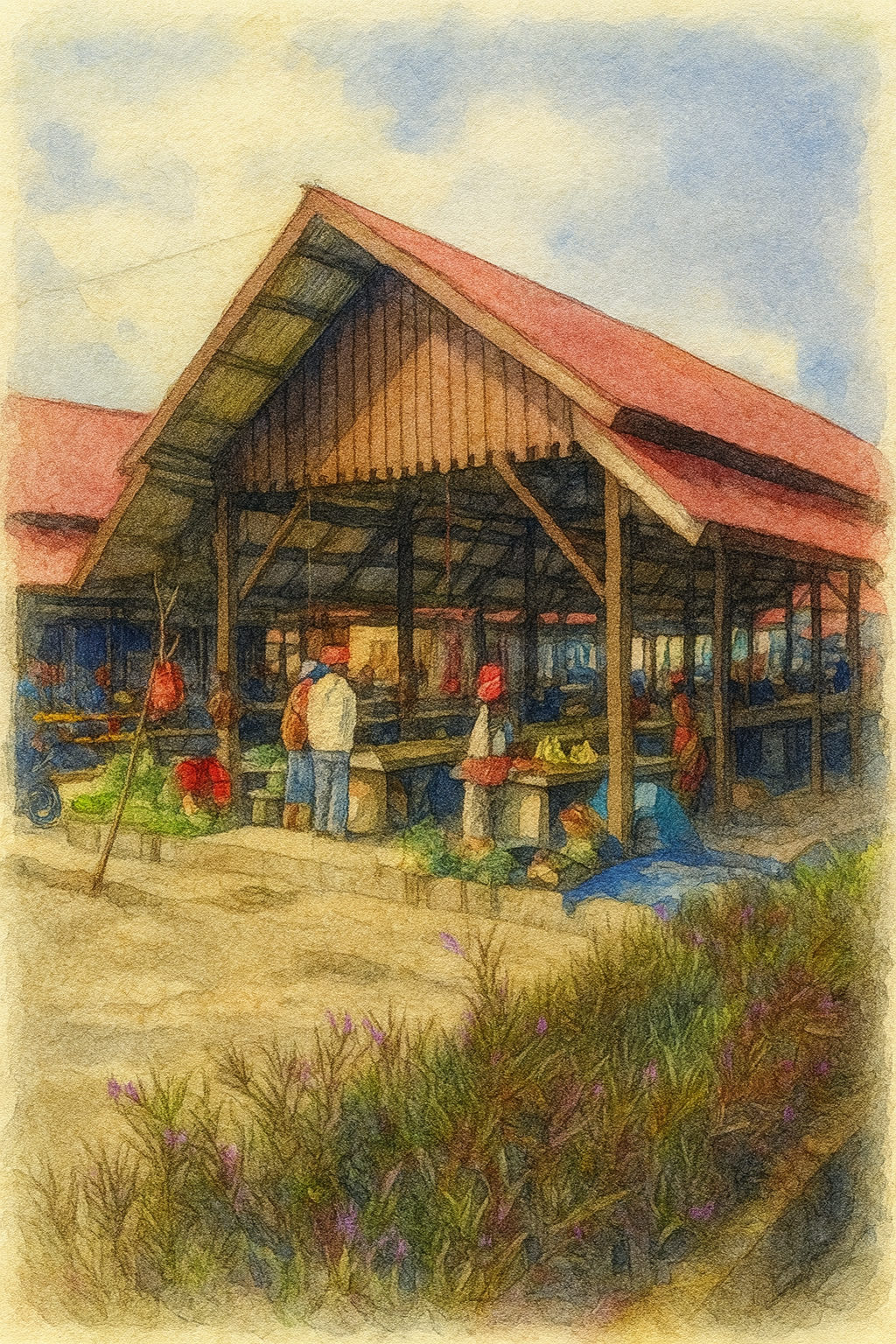
This study investigates the income potential, marketing dynamics, and agrotourism opportunities of smallholder strawberry vendors in Potikelek Traditional Market, Wamena City, Highland Papua Province, where highland conditions are well suited for horticultural production. The research aims to assess the profitability of strawberry vending within traditional markets, identify structural constraints, and explore its contribution to sustainable livelihoods and rural diversification. Employing a qualitative descriptive design, data were collected through structured interviews with fifteen vendors and direct observations of sales and market practices. Profit calculations were based on the relationship between total revenue, fixed costs, variable costs, and net income. The findings reveal that strawberry vending generates an average weekly profit of Rp 376,250, providing meaningful but fragile income largely managed by women vendors. Cost structures were dominated by variable expenses, particularly labor and planting materials, while access to capital remained limited, constraining opportunities for scaling. Marketing channels centered on direct sales, allowing some flexibility but restricting bargaining power and geographic reach. Post-harvest losses were frequent due to inadequate storage and preservation technologies, while consumer preferences emphasized freshness, firmness, and visual appeal. These results align with studies highlighting the potential of high-value horticultural crops in supporting rural incomes but also confirm persistent vulnerabilities caused by financial exclusion, infrastructure gaps, and weak market integration. The study concludes that strawberries hold promise not only as a supplementary livelihood source but also as a driver of agrotourism and regional identity if supported by policies enhancing credit access, post-harvest innovation, and market linkages.
Keywords
Article Details
Copyright (c) 2025 Muhamad Fagi Difinubun, Kaharuddin Kaharuddin

This work is licensed under a Creative Commons Attribution-ShareAlike 4.0 International License.
- Authors retain copyright and grant the journal right of first publication with the work simultaneously licensed under a Creative Commons Attribution License that allows others to share the work with an acknowledgement of the work's authorship and initial publication in this journal.
- Authors are able to enter into separate, additional contractual arrangements for the non-exclusive distribution of the journal's published version of the work (e.g., post it to an institutional repository or publish it in a book), with an acknowledgement of its initial publication in this journal.
- Authors are permitted and encouraged to post their work online (e.g., in institutional repositories or on their website) prior to and during the submission process, as it can lead to productive exchanges, as well as earlier and greater citation of published work.