Article Sidebar
Downloads
Main Article Content
Abstract
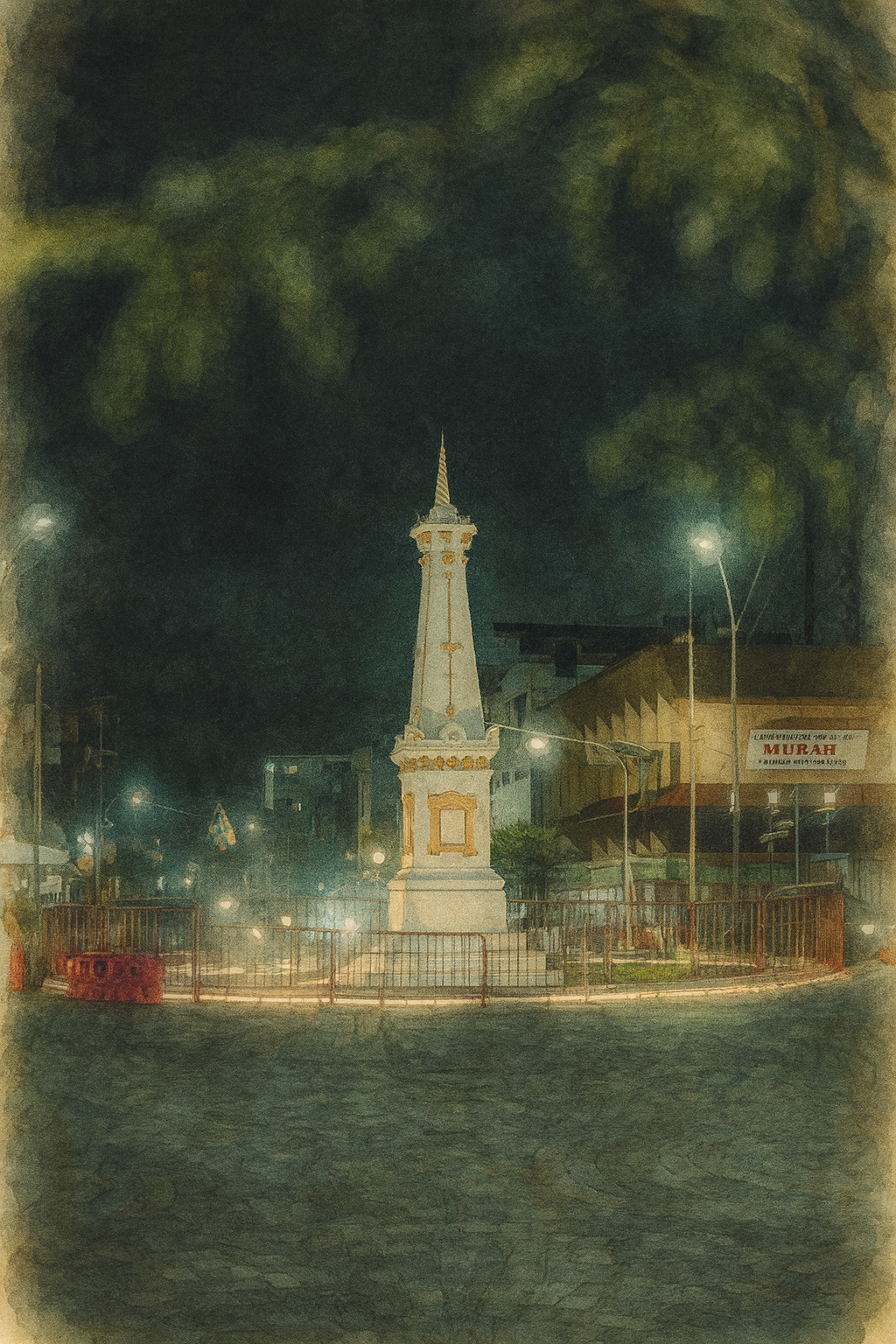
Integrating digital technologies into urban spaces has transformed traditional placemaking, with user-generated content (UGC) offering invaluable insights into public perceptions. This study addresses a significant research gap by investigating how UGC sentiment analysis can capture and inform understanding of culturally important sites, focusing on the Yogyakarta Philosophical Axis. The research aims to uncover UGC-derived insights for architectural and urban planning decisions and to examine the relationship between digital sentiments and authentic physical experiences along this UNESCO-recognized heritage corridor. Employing a robust methodology, over 1,700 Google Maps reviews from six key sites – Tugu Yogyakarta, Malioboro Street, North Square, Kraton, South Square, and Panggung Krapyak – were collected, preprocessed, and analyzed using BoardFlare, DeepSeek AI, and ChatGPT for sentiment triangulation. Findings reveal a generally positive perception of the Axis, yet expose a critical disparity between high numerical star ratings and more nuanced, often lower, textual sentiment scores, highlighting the limitations of simplistic metrics. While sites like Tugu Yogyakarta garnered high positive sentiment due to their symbolic resonance, others, such as Panggung Krapyak, received low scores due to infrastructural deficiencies and limited access, indicating significant 'placemaking inequality.' This study highlights the crucial role of multi-tool sentiment analysis in mitigating computational biases and fostering a comprehensive understanding of digital affect. It demonstrates that UGC, when critically analyzed, serves as a powerful diagnostic tool for urban heritage management, revealing how digital interactions both reflect and shape perceptions of place, thereby informing holistic strategies for balancing cultural preservation with the demands of modern urban development.
Article Details
Copyright (c) 2025 M. Galieh Gunagama, Muhammad Mufeed Al Bareeq, Fiorino Piscal Akbar

This work is licensed under a Creative Commons Attribution-ShareAlike 4.0 International License.
- Authors retain copyright and grant the journal right of first publication with the work simultaneously licensed under a Creative Commons Attribution License that allows others to share the work with an acknowledgement of the work's authorship and initial publication in this journal.
- Authors are able to enter into separate, additional contractual arrangements for the non-exclusive distribution of the journal's published version of the work (e.g., post it to an institutional repository or publish it in a book), with an acknowledgement of its initial publication in this journal.
- Authors are permitted and encouraged to post their work online (e.g., in institutional repositories or on their website) prior to and during the submission process, as it can lead to productive exchanges, as well as earlier and greater citation of published work.