
Article Sidebar
Main Article Content
Abstract
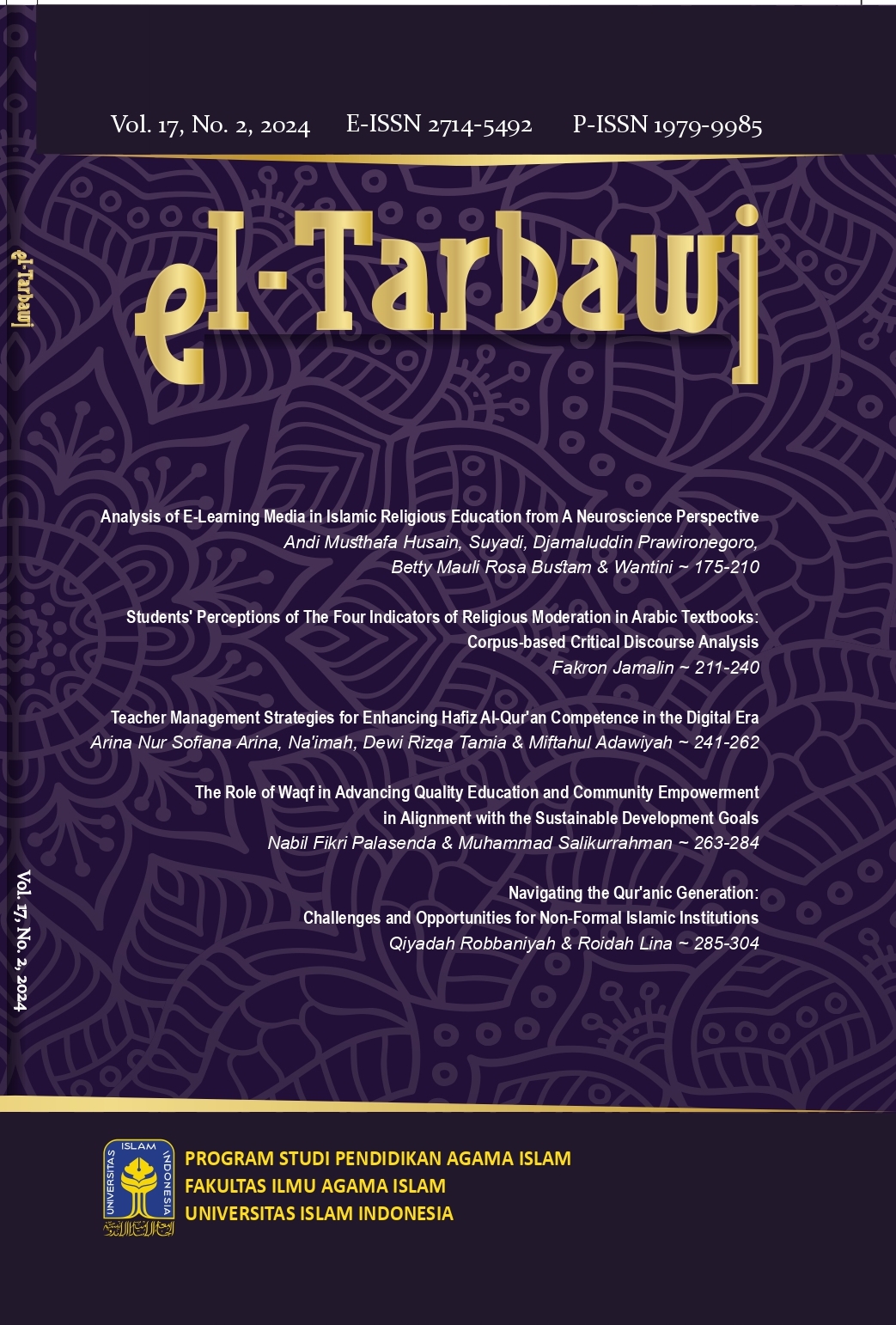
This study explores the management of non-formal Islamic educational institutions in fostering a Qur’anic generation with strong faith and noble character. Employing a qualitative research approach, the study examines the distinctive educational strategies implemented by various institutions. Specifically, it analyzes the integration of Qur’anic memorization (tahfidz) and entrepreneurship at Rumah Tahfidz An-Nahl, the structured memorization system at Rumah Tahfidz Dar Aisyah, and the combination of skill-based training and Arabic language instruction at LPK Jamilurrahman. Data were collected through in-depth interviews, direct observations, and document analysis. The collected data were then analyzed descriptively to gain insights into the management approaches and challenges faced by these institutions. The findings indicate that the primary challenges include limitations in the availability of qualified educators, inadequate infrastructure, and difficulties in managing student engagement. Each institution employs unique strategies to address these issues, such as involving alumni in teaching roles and implementing supervision systems to maintain discipline and learning quality. Despite these challenges, the study reveals that the unwavering commitment of these institutions to delivering high-quality education rooted in Islamic values remains their core strength. These findings highlight the critical role of non-formal Islamic education in providing relevant and beneficial learning opportunities, contributing significantly to the development of morally upright and competent individuals.
Keywords
Article Details
Copyright (c) 2025 Qiyadah Robbaniyah, Roidah Lina

This work is licensed under a Creative Commons Attribution-ShareAlike 4.0 International License.
Authors retain copyright and grant the journal right of first publication with the work simultaneously licensed under a Creative Commons Attribution (CC-BY-SA) 4.0 License that allows others to share the work with an acknowledgment of the work’s authorship and initial publication in this journal.
References
- Abbasi-Shavazi, M. J., & Torabi, F. (2012). Women’s education and fertility in Islamic countries. Population Dynamics in Muslim Countries: Assembling the Jigsaw, 43–62. https://doi.org/10.1007/978-3-642-27881-5_4
- Abrahams, L., Pancorbo, G., Primi, R., Santos, D., Kyllonen, P., John, O. P., & De Fruyt, F. (2019). Social-emotional skill assessment in children and adolescents: Advances and challenges in personality, clinical, and educational contexts. Psychological Assessment, 31(4), 460–473.https://doi.org/10.1037/pas0000591
- Boden-Albala, B., Goldmann, E., Parikh, N. S., Carman, H., Roberts, E. T., Lord, A. S., Torrico, V., Appleton, N., Birkemeier, J., Parides, M., & Quarles, L. (2019). Efficacy of a discharge educational strategy vs standard discharge care on reduction of vascular risk in patients with stroke and transient ischemic attack: The DESERVE randomized clinical trial. JAMA Neurology, 76(1), 20–27. https://doi.org/10.1001/jamaneurol.2018.2926
- Brandenburg, M., Govindan, K., Sarkis, J., & Seuring, S. (2014). Quantitative models for sustainable supply chain management: Developments and directions. European Journal of Operational Research, 233(2), 299–312. https://doi.org/10.1016/j.ejor.2013.09.032
- Chong, Y. W., & Abdul Hamid, S. N. B. (2016). Meeting the challenges of personal development and character building in university students. International Review of Management and Marketing, 6(8 Special Issue), 181–186. https://econjournals.com/index.php/irmm/article/view/3929
- Dalimunthe, M. A., Pallathadka, H., Muda, I., Manoharmayum, D. D., Shah, A. H., Prodanova, N. A., Mamarajabov, M. E., & Singer, N. (2023). Challenges of Islamic education in the new era of information and communication technologies. HTS Teologiese Studies / Theological Studies, 79(1), 1-6. https://doi.org/10.4102/hts.v79i1.8608
- Ihsan, & Fatah, A. (2021). Pancasila and Islamic education: The deradicalization model of madrasahs based on Islamic boarding schools in Central Java. Qudus International Journal of Islamic Studies, 9(1), 245–278. http://dx.doi.org/10.21043/qijis.v9i1.8941
- Ishak, M. S. B. H., & Abdullah, O. C. (2013). Islamic education in Malaysia: A study of history and development. Religious Education, 108(3), 298–311. https://doi.org/10.1080/00344087.2013.783362
- Karyono, H., Sukmariningsih, R. M., & Isharyanto, J. E. (2023). Pancasila ideology as the basis for building the character of the younger generation in Indonesia. Academic Journal of Interdisciplinary Studies, 12(3), 319–326. https://doi.org/10.36941/ajis-2023-0080
- Marini, A., Maksum, A., Edwita, E., Satibi, O., & Kaban, S. (2019). School management on the basis of character building in teaching learning process. Journal of Physics: Conference Series, 1402(2). https://doi.org/10.1088/1742-6596/1402/2/022067
- Mohamed, H. A. B., Ab. Ghani, A. M., & Basir, S. A. (2016). Factors influencing the implementation of Islamic QMS in a Malaysian public higher education institution. Total Quality Management and Business Excellence, 27(9–10), 1140–1157. https://doi.org/10.1080/14783363.2015.1064765
- Muhajir, A. (2022). Inclusion of pluralism character education in the Islamic modern boarding schools during the pandemic era. Journal of Social Studies Education Research, 13(2), 196–220. https://jsser.org/index.php/jsser/article/view/4233
- Nata, A. (2000). Pemikiran Para Tokoh Pendidikan Islam (2nd ed.). Jakarta: Gramedia.
- Prasetyaningtyas, F. D., & Sutaryono, S. (2021). The application of action learning approach for building students’ character through community services. Proceedings of the International Conference on Industrial Engineering and Operations Management, 3447.
- Riduan, M., Maufur, M., & Abdurakhman, O. (2016). Manajemen program tahfizhl Alquran pada pondok pesantren modern program management memorizing the Quran at Islamicboarding school. Ta’dibi, 5(1), 1-22.
- Robbaniyah, Q., & Lina, R. (2023). Learning Arabic for special class quarantine Madrasah Aliyah Islamic Center Bin Baz Islamic Boarding School. Shibghoh: Prosiding Ilmu Kependidikan UNIDA Gontor, 2(1), 483–491. https://ejournal.unida.gontor.ac.id/index.php/shibghoh/article/view/11018
- Sugiarti, R., Erlangga, E., Suhariadi, F., Winta, M. V. I., & Pribadi, A. S. (2022). The influence of parenting on building character in adolescents. Heliyon, 8(5). https://doi.org/10.1016/j.heliyon.2022.e09349
- Tolchah, M., & Mu’ammar, M. A. (2019). Islamic education in the globalization era; Challenges, opportunities, and contribution of Islamic education in Indonesia. Humanities and Social Sciences Reviews, 7(4), 1031–1037. https://doi.org/10.18510/hssr.2019.74141
- Uljens, M., & Ylimaki, R. M. (2017). Bridging educational leadership, curriculum theory and didaktik (Vol. 5). Springer.
- Zulkarnain, Z., & Zubaedi, Z. (2021). Implementation of community-based education management: A case study of Islamic boarding schools in Bengkulu City, Indonesia. Cypriot Journal of Educational Sciences, 16(5), 2640–2650. https://doi.org/10.18844/cjes.v16i5.6331
References
Abbasi-Shavazi, M. J., & Torabi, F. (2012). Women’s education and fertility in Islamic countries. Population Dynamics in Muslim Countries: Assembling the Jigsaw, 43–62. https://doi.org/10.1007/978-3-642-27881-5_4
Abrahams, L., Pancorbo, G., Primi, R., Santos, D., Kyllonen, P., John, O. P., & De Fruyt, F. (2019). Social-emotional skill assessment in children and adolescents: Advances and challenges in personality, clinical, and educational contexts. Psychological Assessment, 31(4), 460–473.https://doi.org/10.1037/pas0000591
Boden-Albala, B., Goldmann, E., Parikh, N. S., Carman, H., Roberts, E. T., Lord, A. S., Torrico, V., Appleton, N., Birkemeier, J., Parides, M., & Quarles, L. (2019). Efficacy of a discharge educational strategy vs standard discharge care on reduction of vascular risk in patients with stroke and transient ischemic attack: The DESERVE randomized clinical trial. JAMA Neurology, 76(1), 20–27. https://doi.org/10.1001/jamaneurol.2018.2926
Brandenburg, M., Govindan, K., Sarkis, J., & Seuring, S. (2014). Quantitative models for sustainable supply chain management: Developments and directions. European Journal of Operational Research, 233(2), 299–312. https://doi.org/10.1016/j.ejor.2013.09.032
Chong, Y. W., & Abdul Hamid, S. N. B. (2016). Meeting the challenges of personal development and character building in university students. International Review of Management and Marketing, 6(8 Special Issue), 181–186. https://econjournals.com/index.php/irmm/article/view/3929
Dalimunthe, M. A., Pallathadka, H., Muda, I., Manoharmayum, D. D., Shah, A. H., Prodanova, N. A., Mamarajabov, M. E., & Singer, N. (2023). Challenges of Islamic education in the new era of information and communication technologies. HTS Teologiese Studies / Theological Studies, 79(1), 1-6. https://doi.org/10.4102/hts.v79i1.8608
Ihsan, & Fatah, A. (2021). Pancasila and Islamic education: The deradicalization model of madrasahs based on Islamic boarding schools in Central Java. Qudus International Journal of Islamic Studies, 9(1), 245–278. http://dx.doi.org/10.21043/qijis.v9i1.8941
Ishak, M. S. B. H., & Abdullah, O. C. (2013). Islamic education in Malaysia: A study of history and development. Religious Education, 108(3), 298–311. https://doi.org/10.1080/00344087.2013.783362
Karyono, H., Sukmariningsih, R. M., & Isharyanto, J. E. (2023). Pancasila ideology as the basis for building the character of the younger generation in Indonesia. Academic Journal of Interdisciplinary Studies, 12(3), 319–326. https://doi.org/10.36941/ajis-2023-0080
Marini, A., Maksum, A., Edwita, E., Satibi, O., & Kaban, S. (2019). School management on the basis of character building in teaching learning process. Journal of Physics: Conference Series, 1402(2). https://doi.org/10.1088/1742-6596/1402/2/022067
Mohamed, H. A. B., Ab. Ghani, A. M., & Basir, S. A. (2016). Factors influencing the implementation of Islamic QMS in a Malaysian public higher education institution. Total Quality Management and Business Excellence, 27(9–10), 1140–1157. https://doi.org/10.1080/14783363.2015.1064765
Muhajir, A. (2022). Inclusion of pluralism character education in the Islamic modern boarding schools during the pandemic era. Journal of Social Studies Education Research, 13(2), 196–220. https://jsser.org/index.php/jsser/article/view/4233
Nata, A. (2000). Pemikiran Para Tokoh Pendidikan Islam (2nd ed.). Jakarta: Gramedia.
Prasetyaningtyas, F. D., & Sutaryono, S. (2021). The application of action learning approach for building students’ character through community services. Proceedings of the International Conference on Industrial Engineering and Operations Management, 3447.
Riduan, M., Maufur, M., & Abdurakhman, O. (2016). Manajemen program tahfizhl Alquran pada pondok pesantren modern program management memorizing the Quran at Islamicboarding school. Ta’dibi, 5(1), 1-22.
Robbaniyah, Q., & Lina, R. (2023). Learning Arabic for special class quarantine Madrasah Aliyah Islamic Center Bin Baz Islamic Boarding School. Shibghoh: Prosiding Ilmu Kependidikan UNIDA Gontor, 2(1), 483–491. https://ejournal.unida.gontor.ac.id/index.php/shibghoh/article/view/11018
Sugiarti, R., Erlangga, E., Suhariadi, F., Winta, M. V. I., & Pribadi, A. S. (2022). The influence of parenting on building character in adolescents. Heliyon, 8(5). https://doi.org/10.1016/j.heliyon.2022.e09349
Tolchah, M., & Mu’ammar, M. A. (2019). Islamic education in the globalization era; Challenges, opportunities, and contribution of Islamic education in Indonesia. Humanities and Social Sciences Reviews, 7(4), 1031–1037. https://doi.org/10.18510/hssr.2019.74141
Uljens, M., & Ylimaki, R. M. (2017). Bridging educational leadership, curriculum theory and didaktik (Vol. 5). Springer.
Zulkarnain, Z., & Zubaedi, Z. (2021). Implementation of community-based education management: A case study of Islamic boarding schools in Bengkulu City, Indonesia. Cypriot Journal of Educational Sciences, 16(5), 2640–2650. https://doi.org/10.18844/cjes.v16i5.6331