
Article Sidebar
Main Article Content
Abstract
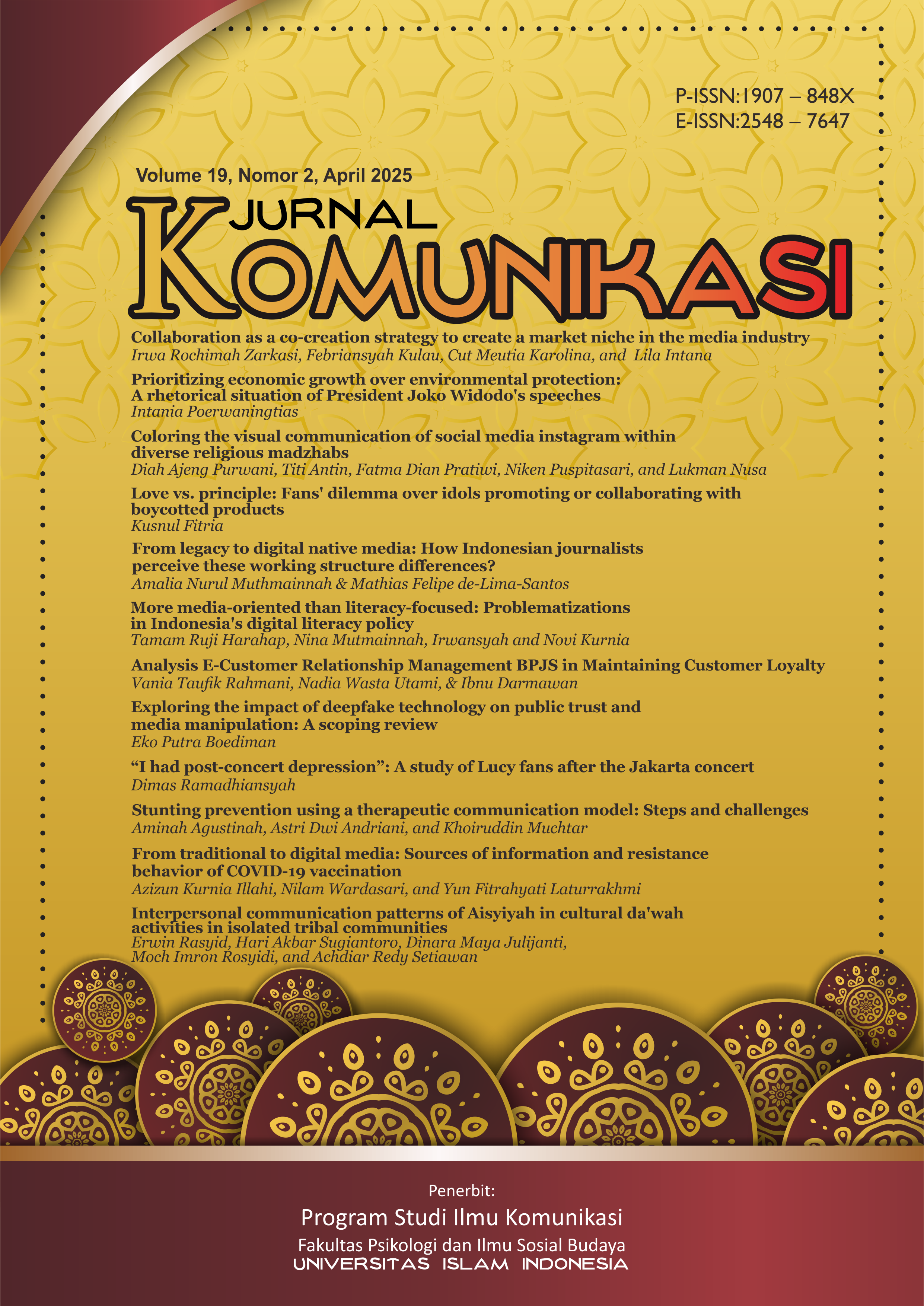
The articles published in Jurnal Komunikasi Vol. 19 No. 2 April 2025 continue the trend observed in studies featured in recent editions of Jurnal Komunikasi. These studies reflect a growing interest in new media or digital media research across various objects, approaches, and perspectives amidst a steady decline in attention toward traditional media such as radio, television, and newspapers. Although television remains an important source of information and entertainment in Indonesia and was even highly popular several decades ago (Heryanto, 2015), researchers now appear more inclined to focus on internet-based digital media studies. This interest is inseparable from the increasingly prominent presence of digital media platforms over recent years not only in Indonesia but also globally (Twenge et al., 2019). For illustration, data released by the Pew Research Center indicate that the majority of Americans use YouTube and Facebook; meanwhile Instagram, Snapchat, and TikTok are predominantly used by those under thirty years old
Keywords
Article Details
Copyright (c) 2025 Puji Rianto

This work is licensed under a Creative Commons Attribution-ShareAlike 4.0 International License.
Authors who publish with this journal agree to the following terms:
- Authors retain copyright and grant the journal right of first publication with the work simultaneously licensed under a Creative Commons Attribution License that allows others to share the work with an acknowledgement of the work's authorship and initial publication in this journal.
- Authors are able to enter into separate, additional contractual arrangements for the non-exclusive distribution of the journal's published version of the work (e.g., post it to an institutional repository or publish it in a book), with an acknowledgement of its initial publication in this journal.
- Authors are permitted and encouraged to post their work online (e.g., in institutional repositories or on their website) prior to and during the submission process, as it can lead to productive exchanges, as well as earlier and greater citation of published work (See The Effect of Open Access).


References
- Abidin, A. Z., & Rachma, I. (2018). Etnografi virtual sebagai teknik pengumpulan data dan metode penelitian. The Journal of Society & Media, 2(2), 130–145. https://journal.unesa.ac.id/index.php/jsm/index
- Auxier, B., & Anderson, M. (2021). Social media use in 2021. 5 April. https://www.pewresearch.org/internet/2021/04/07/social-media-use-in-2021/pi_2021-04-07_social-media_0-01-png/
- Baber, Z. (2003). New media, new politics? the internet and the prospects for digital democracy. Bulletin of Science, Technology & Society, 23(2), 125–128. https://doi.org/10.1177/0270467603251307
- Budiarto, H., Pahlevi, S. M., Susenna, A., Kusumasari, D., Agustina, L., S., Y. A. A., Hernikawati, D., & Rahmi, A. A. (2024). Indeks masyarakat digital indonesia (IMDI) 2024. https://imdi.sdmdigital.id/publikasi/02122024_Buku IMDI_BAB 1-5_V6_compressed.pdf
- Castells, M. (2004). Informationalism, networks, and the network society: A theoretical blueprint. In Castells (Ed.), The Network Society A Cross-cultural Perspective (firts edit, pp. 3–48). Edward Elgar Publishing, Inc.
- Chen, Y., Sherren, K., Smit, M., & Lee, K. Y. (2021). Using social media images as data in social science research. New Media & Society, 00(0), 1–23. https://doi.org/10.1177/14614448211038761
- Donthu, N., Kumar, S., Mukherjee, D., Pandey, N., & Lim, W. M. (2021). How to conduct a bibliometric analysis: An overview and guidelines. Journal of Business Research, 133(March), 285–296. https://doi.org/10.1016/j.jbusres.2021.04.070
- Heryanto, A. (2015). Identitas dan Kenikmatan, Politik Budaya Layar di Indonesia (1st ed.). KPG.
- Jiang, Y. (2023). The research on the current situation and trends of social media marketing. ASSEHR 752, 348–355. https://doi.org/10.2991/978-2-38476-062-6_44
- Kozinets, R. V. (2015). Netnography: Redefined (Second). Sage Publications.
- Kutlu-Abu, N., & Arslan, R. (2023). Evolving trend of media literacy research: A bibliometric analysis. Journal of Media Literacy Education, 15(1), 85–98. https://doi.org/10.23860/JMLE-2023-15-1-7
- Laila, N., Sukmaningrum, P. S., Azman, W., Wan, S., Rosyidi, N., & Rahmawati, I. (2024). An in-depth analysis of digital marketing trends and prospects in small and medium-sized enterprises : utilizing bibliometric mapping. Cogent Business & Management, 11(1), 1–22. https://doi.org/10.1080/23311975.2024.2336565
- Lister, M., Dovey, J., Giddings, S., Grant, I., & Kelly, K. (2009). New media, a critical introduction. Routledge.
- Mahrt, M., & Scharkow, M. (2013). The value of big data in digital media research. Journal of Broadcasting and Electronic Media, 57(1), 20–33. https://doi.org/10.1080/08838151.2012.761700
- Mayasari, F. (2022). Etnografi virtual fenomena cancel culture dan partisipasi pengguna media terhadap tokoh publik di media sosial. Journal of Communication and Society, 1(01), 27–44. https://doi.org/10.55985/jocs.v1i01.15
- Panggabean, A. D. (Mei, 29, 2024). Ini data statistik penggunaan media sosial masyarakat Indonesia tahun 2024. RRI. https://www.rri.co.id/iptek/721570/ini-data-statistik-penggunaan-media-sosial-masyarakat-indonesia-tahun-2024
- Roseline, R., Julius, J., Boseke, L. C. A., & Nurhidayat, S. S. (2023). Cancel culture di twitter: etnografi virtual kasus gofar hilman dan radio prambors di akun @Prambors. Cakrawala - Jurnal Humaniora, 23(1), 10–15. https://doi.org/10.31294/jc.v23i1.13848
- Saukko, P. (2011). Doing research in cultural studies. https://doi.org/10.4135/9781849209021
- Sulistyanto, A., & Jamil, A. (2023). Trends of agenda setting research: A bibliometric and a thematic meta-analysis. Komunikator, 15(1), 1–18. https://doi.org/10.18196/jkm.18166
- Teng, S., Jiang, N., & Khong, K. W. (2022). Using big data to understand the online ecology of COVID-19 vaccination hesitancy. Humanities and Social Sciences Communications, 9(1), 1–15. https://doi.org/10.1057/s41599-022-01185-6
- Twenge, J. M., Martin, G. N., & Spitzberg, B. H. (2019). Trends in U.S. adolescents’ media use, 1976–2016: The rise of digital media, the decline of tv, and the (near) demise of print. Psychology of Popular Media Culture, 8(4), 329–345. https://doi.org/10.1037/ppm0000203
- Van Dijck, J., Poell, T., & de Waal, M. (2018). The platform society, public values in a connective world. Oxford University Press.
References
Abidin, A. Z., & Rachma, I. (2018). Etnografi virtual sebagai teknik pengumpulan data dan metode penelitian. The Journal of Society & Media, 2(2), 130–145. https://journal.unesa.ac.id/index.php/jsm/index
Auxier, B., & Anderson, M. (2021). Social media use in 2021. 5 April. https://www.pewresearch.org/internet/2021/04/07/social-media-use-in-2021/pi_2021-04-07_social-media_0-01-png/
Baber, Z. (2003). New media, new politics? the internet and the prospects for digital democracy. Bulletin of Science, Technology & Society, 23(2), 125–128. https://doi.org/10.1177/0270467603251307
Budiarto, H., Pahlevi, S. M., Susenna, A., Kusumasari, D., Agustina, L., S., Y. A. A., Hernikawati, D., & Rahmi, A. A. (2024). Indeks masyarakat digital indonesia (IMDI) 2024. https://imdi.sdmdigital.id/publikasi/02122024_Buku IMDI_BAB 1-5_V6_compressed.pdf
Castells, M. (2004). Informationalism, networks, and the network society: A theoretical blueprint. In Castells (Ed.), The Network Society A Cross-cultural Perspective (firts edit, pp. 3–48). Edward Elgar Publishing, Inc.
Chen, Y., Sherren, K., Smit, M., & Lee, K. Y. (2021). Using social media images as data in social science research. New Media & Society, 00(0), 1–23. https://doi.org/10.1177/14614448211038761
Donthu, N., Kumar, S., Mukherjee, D., Pandey, N., & Lim, W. M. (2021). How to conduct a bibliometric analysis: An overview and guidelines. Journal of Business Research, 133(March), 285–296. https://doi.org/10.1016/j.jbusres.2021.04.070
Heryanto, A. (2015). Identitas dan Kenikmatan, Politik Budaya Layar di Indonesia (1st ed.). KPG.
Jiang, Y. (2023). The research on the current situation and trends of social media marketing. ASSEHR 752, 348–355. https://doi.org/10.2991/978-2-38476-062-6_44
Kozinets, R. V. (2015). Netnography: Redefined (Second). Sage Publications.
Kutlu-Abu, N., & Arslan, R. (2023). Evolving trend of media literacy research: A bibliometric analysis. Journal of Media Literacy Education, 15(1), 85–98. https://doi.org/10.23860/JMLE-2023-15-1-7
Laila, N., Sukmaningrum, P. S., Azman, W., Wan, S., Rosyidi, N., & Rahmawati, I. (2024). An in-depth analysis of digital marketing trends and prospects in small and medium-sized enterprises : utilizing bibliometric mapping. Cogent Business & Management, 11(1), 1–22. https://doi.org/10.1080/23311975.2024.2336565
Lister, M., Dovey, J., Giddings, S., Grant, I., & Kelly, K. (2009). New media, a critical introduction. Routledge.
Mahrt, M., & Scharkow, M. (2013). The value of big data in digital media research. Journal of Broadcasting and Electronic Media, 57(1), 20–33. https://doi.org/10.1080/08838151.2012.761700
Mayasari, F. (2022). Etnografi virtual fenomena cancel culture dan partisipasi pengguna media terhadap tokoh publik di media sosial. Journal of Communication and Society, 1(01), 27–44. https://doi.org/10.55985/jocs.v1i01.15
Panggabean, A. D. (Mei, 29, 2024). Ini data statistik penggunaan media sosial masyarakat Indonesia tahun 2024. RRI. https://www.rri.co.id/iptek/721570/ini-data-statistik-penggunaan-media-sosial-masyarakat-indonesia-tahun-2024
Roseline, R., Julius, J., Boseke, L. C. A., & Nurhidayat, S. S. (2023). Cancel culture di twitter: etnografi virtual kasus gofar hilman dan radio prambors di akun @Prambors. Cakrawala - Jurnal Humaniora, 23(1), 10–15. https://doi.org/10.31294/jc.v23i1.13848
Saukko, P. (2011). Doing research in cultural studies. https://doi.org/10.4135/9781849209021
Sulistyanto, A., & Jamil, A. (2023). Trends of agenda setting research: A bibliometric and a thematic meta-analysis. Komunikator, 15(1), 1–18. https://doi.org/10.18196/jkm.18166
Teng, S., Jiang, N., & Khong, K. W. (2022). Using big data to understand the online ecology of COVID-19 vaccination hesitancy. Humanities and Social Sciences Communications, 9(1), 1–15. https://doi.org/10.1057/s41599-022-01185-6
Twenge, J. M., Martin, G. N., & Spitzberg, B. H. (2019). Trends in U.S. adolescents’ media use, 1976–2016: The rise of digital media, the decline of tv, and the (near) demise of print. Psychology of Popular Media Culture, 8(4), 329–345. https://doi.org/10.1037/ppm0000203
Van Dijck, J., Poell, T., & de Waal, M. (2018). The platform society, public values in a connective world. Oxford University Press.